Underworld

“Chaos, confusion, darkness,
Into the underworld I go.”

The underworld is a fascinating place. As the name implies, it is the world below the one we usually inhabit. We know the world. But the underworld is the land of the hidden, the place where our waking self cannot go. The underworld holds all that is unknown.

In popular culture, to be an underworld figure means to be part of a crime syndicate. In mythology, the underworld refers to hell, or the closest equivalent of, depending on the culture in question. The underworld gives home to all that is unthinkable, all the traits in human consciousness that contain darkness. In the underworld lies all that is hidden.
What does it mean then, to travel to the underworld?

It means acceptance of the chaos, confusion and darkness that exist in our world. These qualities are present, just as harmony, clarity and light are present.

To travel to the underworld, we must accept that we cannot have a light and that we cannot see ahead. There is no path, there is no destination.

But there is a way. Both to the underworld, then back again.

-A.S. Lenah Valley, 28/7/22

The Great Unraveling

We are living in the age of the Great Unraveling*.

We have reached the limits of our current paradigm and are in the process of transitioning to a new one. Humanity isn’t doing this willingly, and the less willing we are in accomplishing this transition, the more difficult things are going to get for us.

Eventually, the Great Unraveling will take us through to the Great Turning and it is here that we will begin a new phase in the Earth’s history.

-A.S. 23/7/22

* See ‘World as Lover, World as Self’, by Joanna Macy.

Piecing it together...

A panorama is an image that has been ‘stitched together’ from multiple photographs.

In landscape photography, the subject often doesn’t fit into a single shot. In this case, multiple single images can be taken, slightly overlapped and with the wonder of digital processing, a single image may be created from our broken mosaic of photographs. There are a few tricks and a bit of wizardry sometimes, especially when the photographs were not taken correctly; but even then, sometimes the images simply don’t match and our panorama never appears. Other times, the result is seamless and beautiful.

Here is a collection of my favourite panoramic images I have taken over the last few years. These have all been shot on all-mechanical film cameras. No light meters, no electronics, just a little wind up arm and a roll of film.

The beauty of these images is that the full files are quite large, consisting of up to 12 individual shots in some cases. This means these images can be printed BIG!

Enjoy!

-A.S.

Mt Gell Panorama, Tasmania, 2019. Pentax MX, 50mm, Ektar 100.

Arrow Tarn Panorama, Central Highlands, Pentax MX, 50mm, 2021.

Freycinet Panorama, Pentax MX, 2021.

King William Saddle Panorama, Hasselblad 500C/M, 2020.

Wineglass Bay Panorama, 2019. Pentax MX, Ektar 100.

Lake St Clair Panorama, 2019, Pentax MX, Ektar 100. This image is currently displayed at the Lake St Clair Visitor Centre. It is nearly two metres wide.

Lake Pedder Panorama, 2021. Hasselblad 500C/M. This image might look familiar. If you could see through the tannin stained waters of the impoundment, you might be able to make out a beach, hidden below.

Voila! New and old together. The previous image has been merged with Lindsay Hope’s image from 50 years ago before Lake Pedder was flooded, taken from approximately the same location. Note the two different shorelines (old and new) in the image. The mountains just about overlap. The beach on the right hand of the image is 3.5km long and 800m wide. It is the equivalent of three hundred footy ovals in terms of area. It’s patiently waiting beneath the tannin stained waters of the South West.
One day, it will emerge.

This image was printed onto a 6x3m billboard in Hobart earlier this year with the phrase “What was once, will be again” in the middle of it.

If you wish to spend some time down by Lake Pedder this year, why not register for the 2022 Lake Pedder Bioblitz here?

Thought and Instinct

To think, or not to think,

That is the question.

River Derwent Estuary.

To think, to form words, to solve problems, to understand the complex mechanisms that govern our lives marks our humanity. Through thought, we have learnt how to manipulate our environment, to suit our needs and aspirations. As people, we have the ability to think things through, or to think about a problem, and come up with an appropriate solution. Thoughts can turn into actions and outcomes. This allows us to work smart, not hard. Modern economics is governed by numbers, and our ability to manipulate them. These days the wealth of the world is determined by numbers in a virtual world that is abstract, yet has incredible power over our lives. Our ability to think has allowed us to build abstract models of the world, and through our belief in these abstract models, we have allowed these models to rule our world.


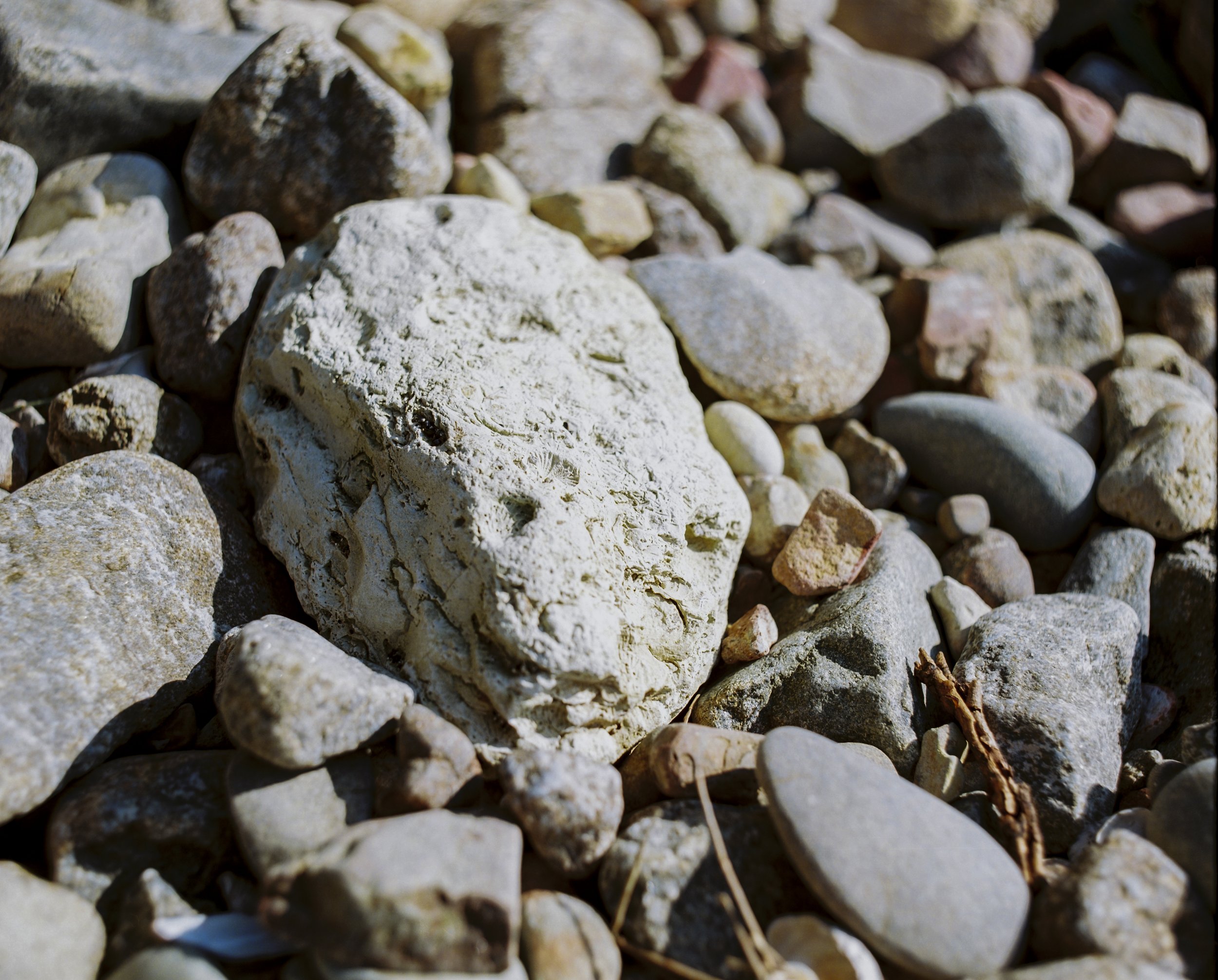
The long dead sea creatures, held in rock.

What is easy to forget is that there is a world outside of human thought. “I think, therefore I am.” The quote by Descartes characterises western thought, where we identify with our thoughts and discount forms of experience that are less thought focused. Our culture places such importance on thought that we have become blind to other forms of experience like sensing, feeling and being. We can think, or not to think. And if we don’t think, we still are. We don’t vanish into a puff of smoke. In fact, thinking can only exist with its counterpart; not-thinking. We can ‘not-think’, and still remain human. I’m calling Descartes out. And I’m calling him out because every action that we take has a price associated with it. If we listen to our thoughts, it means we shut ourselves off to other modes of experiencing the world. We can get stuck in our head, our head that is governed by thought, and become oblivious to the obvious that’s staring us in the face.


Little swing over big sea.

We have a much older way of operating in the world, before our frontal cortex developed into the word and number processing machine that it is, and this way of being relies on our instincts. These are actions that we take without having to think about them. Instincts are less tangible and a bit harder to pin down than thoughts. But even in today’s brain governed culture, we have phrases that allude to the importance of instinct. If our thoughts originate in our brain, then our instinct originates in our ‘gut’. Our ‘gut-feeling’ can warn us of danger, and while western science may scoff at this idea, western science has often been wrong in the past. Our instincts have kept us alive for millions of years before we learnt how to think. Discounting them now spells trouble.

Double exposure of eucalypt and kunanyi.

We have learnt how to think. And now, in the 21st century, I think it’s finally time for humanity to learn how not to think. We need to learn how to collectively let go of thoughts and listen to the older part of our brain that is responsible for governing our basic bodily functions; in other words, our survival. We need to start trusting our gut again. The easiest way I have found of turning off my thoughts is by spending time in nature or by observing my own breath. There is something about being surrounded by other living things and paying attention to the process that sustains our existence that helps us reconnect with our own nature. Thinking is part of our humanity. Not thinking is also part of our humanity. We can’t have one without the other.

Two mathematicians walk into a bar…

Two mathematicians walk into a bar and decide to play a game to see which one of them can name the biggest number.

“One.” -says the first mathematician.

“Two.”- says the other mathematician.

“Ten.”- comes the response.

“One hundred.” -follows the other one.

“One thousand.” - comes the quick reply.

“One million.” - responds the other.

“One billion!”

At this, the other mathematician ponders for a while, then eventually answers.

“Infinity.” - he says with a smug grin.

For a brief moment they both think the game is over. But then, the other mathematician replies with a cheeky smile.

“Infinity, plus one”.

Mushrooms!

With the longest nights of the year having taken place this week, it seems an appropriate time to contemplate the life of fungi, organisms that can grow without any direct sunlight.

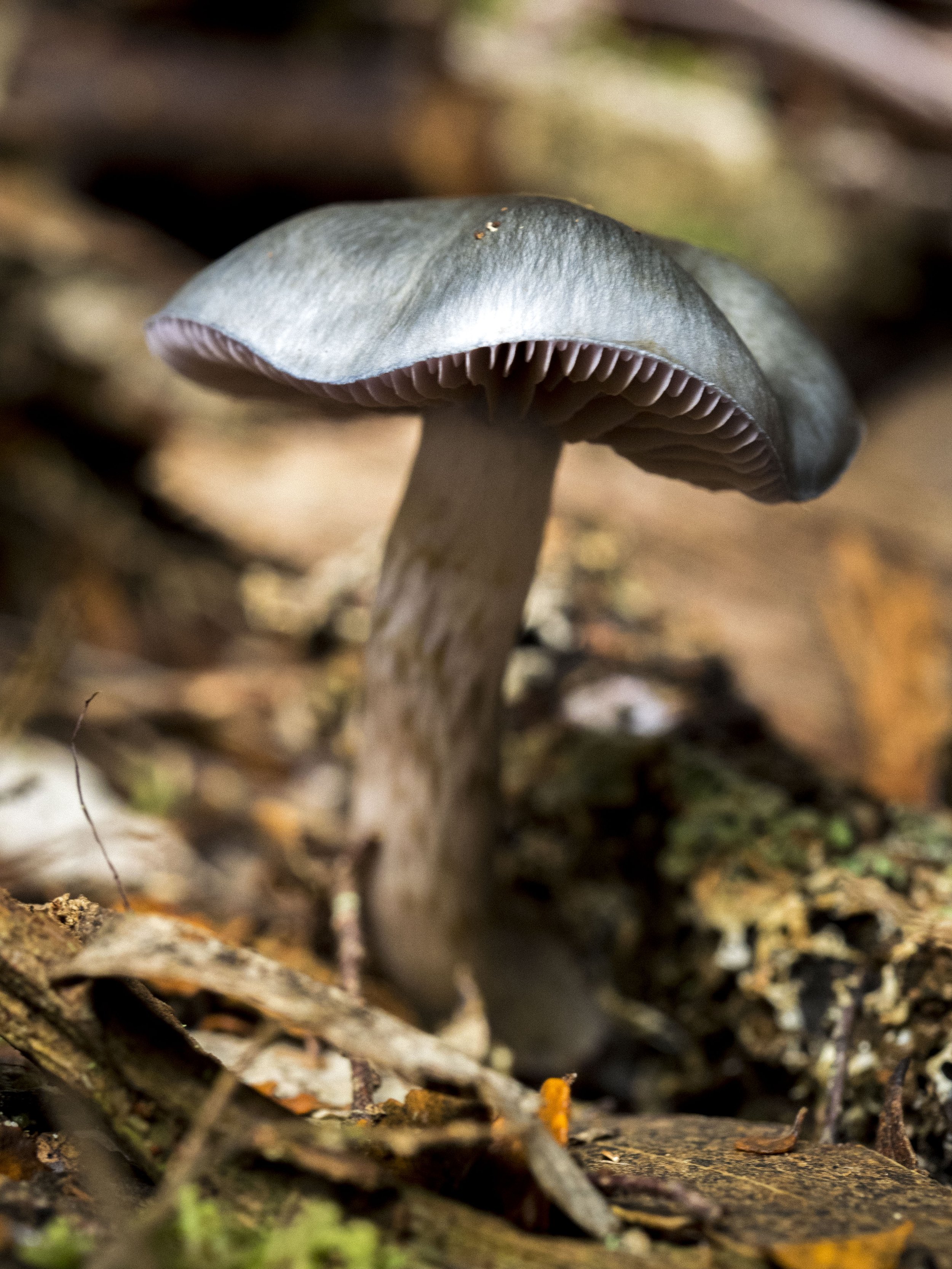
The great recyclers of nature: fungi. 2020, Hasselblad 500C/M, 70mm Planar, Ektar 100.

The great recyclers of nature: fungi. 2020, Hasselblad 500C/M, 70mm Planar, Ektar 100.

Mushrooms are the reproductive organ of a much larger organism called a fungus. A fungus mostly consists of a vast network of filaments in the soil, called mycelium. These filaments criss cross the forest floor and can be so fine and so plentiful that there can be kilometres of mycelium beneath a single footstep. When the conditions are ripe, and the fungus wishes to release its spores, a mushroom will rise up from the mycelium below, a miniature seed spreading tower. For many years we used to think that the mushroom was the fungus. In reality, a mushroom is a bit like the tip of an iceberg; it’s a very small portion of it!

Mushrooms are spore releasing towers. Olympus Em-1, 2018.

Fungi are nature’s recyclers; they break down decomposing organic matter, rotting wood for example and make the nutrients available for other life forms to take up and digest. The filaments of mycelium interact with the roots of plants, trading various nutrients in return for starches and sugars, which the plants acquire through photosynthesis. The combination of mycelium and roots interacting with each other create so called mycorrhizal networks. It is incredibly complex and crucial to the overall well-being of the forest. And most of it is invisible to the human eye.

Mushroom colony, SW National Park. 2018, Olympus Em-1, 12-40mm.

Mushroom colony, SW National Park. 2018, Olympus Em-1, 12-40mm.

Some species of mushrooms contain psilocybin, a psychedelic drug that has profound effects on our state of consciousness. Australia’s peak scientific body, the CSIRO has been recently given the green light to collaborate with medical companies in developing new psychedelic products aimed at helping people through mental illness, including through the use of psilocybin. The use of this drug enables different parts of the brain to communicate with each other more easily by reducing the resistance between neural pathways. This can lead to the individual embracing new perspectives and alternative ways of looking at the world. For someone entrenched in deep depression, the use of psilocybin can have remarkable results by creating the shift in perspective required to break out of a mental rut.

The stinkhorn fungus smells like rotting flesh, appealing to wildlife that will eat it and poop out its spores somewhere else. Genious!

In a world where humanity is producing more waste than it can possibly deal with in a sustainable manner, perhaps we would be wise to learn more about nature’s recyclers: the fungi! Perhaps there is already a fungus that exists out there that can break down plastic, and turn it into something else. Our understanding of fungi is still rudimentary, so investigation into the how these organisms work is likely to yield new discoveries for generations to come.

Solo in the bush...

"Away from technology and jacked up pleasures, the illusions of our thoughts are left behind and we begin to marvel at the simple beauty in life. We are struck blind by the rising sun, we are soothed by the breeze on a warm day and we marvel at the landscape that fills us with a deep sense of peace. In nature we find our redemption. The longer our stint in the wilderness, the more our awareness grows and we are able to adopt our true form, as a consciousness that is free and awake to make its own original decisions. Finally free of thought, we are free to start living.” -A.S. Australian Alps Journal, 2014.

There is a process that I tend to go through in the lead up to a solo wilderness excursion. It begins with the awakening of a strong desire to visit a place, to experience it first hand. It might be born out of a story I have heard, or a feature I have spotted on a map, or a photograph I have seen. The result is a growing resolution to visit the place, regardless of the effort required to reach it. Generally, the places I’m interested in visiting are well guarded. There are a series of obstacles, blocking the way.

My definition of what it means to go solo has evolved over the years. These days, when I say solo, I mean on my own, with no means of communicating with the outside world for the duration of the trip. This means no phone, no PLB, no GPS. If I’m heading out solo, I tend not to take any devices that could help me connect with my society, with my safety net. When I go out solo, I do not wish to be contactable, or wish to contact anyone while I’m out there. If something goes wrong, and I need help, there won’t be any help. I’ll be on my own. To me, this is what it means to be solo in the wilderness.

People tell me that their decision making is not altered by the presence of an emergency device they can set off and call for help. I’m not sure I believe them. Having a device with an SOS function alters the nature of the trip from the outset. A trip we may not be willing to undertake suddenly becomes feasible if we know that we can call for help in case things get out of hand and we are more likely to attempt something that is on the border of our comfort zone.

I would liken the scenario of a bushwalker taking or not taking a PLB to that of a climber who ascends a cliff with or without the a rope. If a climber knows they can fall and be caught by the rope, they are a lot more likely to attempt something that is likely to result in a fall. If certain death awaits in case they fall, the climber will only attempt something that they know they can climb a hundred times and succeed each time.

In other words, if there is a chance of rescue, I believe it is more likely that people will act in a way that will result in a rescue , and this is not necessarily going to be a conscious decision that one is aware of. I still admit that one is taking a bigger risk by not taking a device, however I do think the chance of needing a rescue increases by taking a communications device.

If you don’t want a rescue, preparation is the key.

If I prepare well, each and every time, then I will return, each and every time. Unless of course, something very unlikely happens. But then, something very unlikely could happen on any day of my given life.

I’ve been told I have an ego. So does everyone. It’s part of the human condition. Perhaps my ego is bigger than some other people’s out there. But I’m not so arrogant to think that I cannot make a stupid mistake out in the bush one day that could cost my life. I understand that I take more risk by not taking communications. I don’t pretend I don’t. But I go out accepting the consequences of this conscious decision.

Why bother? Why take the extra risk? Why not just take a device out of consideration for the people whom I love and who love me? Why not take a device out of consideration for a potential search and rescue party?

I’m not sure I can provide a sufficient answer. I understand that my decision not to take a device can appear to be reckless, selfish and unnecessary. But there is a reason why I do it.

I want to experience solitude in nature. I believe that this is what allows us to develop into a fully functioning social creature. It seems paradoxical, and yet I have found this to be true.

I plan my trips with the premise of a return. Before I head out, I learn my escape routes, along every section of my overall route. I have bailed off scrubby ridgelines, I have swum rivers with big packs, and I’ve learnt how to wriggle through the scrub like an overweight wombat. I always take extra food and allow extra time for my return before an overdue alarm may be set off by my emergency contact who has my route intentions.

In order to return, each and every time, I have had to learn how to pay attention to my surroundings. This is the art of navigation. I’ve learnt it the hard way, on my own, by getting lost in the bush, time and time again. People think a compass or a GPS will save them if they get lost. The reality is, being lost is a state where we have lost track of our surroundings and our orientation in them. If I am able to pay continuous attention to the landmarks surrounding me, or if no landmarks are visible, but I can keep track of my rate of progress and direction, then I will always know exactly where I am.

Being lost is a state of mind, not something that happens by accident. Being solo in the bush means I am less likely to get lost, because I have less distractions from paying attention to my surroundings than if I was walking with a bunch of my friends and we were chatting en route. Unfortunately, this also means that if my concentrations does lapse, I don’t have anyone else to blame if I do get lost. But at the end of the day, if I can pitch my tent and make myself a cup of tea, then everything will be absolutely fine. Even if I’m not quite sure exactly where the heck I am.

I have never learnt how to use a gps, and don’t intend to start learning now, or ever. I tend to take a printed map put into a waterproof case, and a compass. The map is secondary to a compass, if one is familiar enough with the landscape. All we really need out there is a foolproof sense of direction, no matter the conditions. And this is where a compass becomes necessary. No matter how accomplished a navigator one is, everyone is prone to getting disorientated in the bush, in the fog and in the scrub.

I’ve learnt that some places in Tasmania fool with the compass needle significantly. Lightning strikes on dolerite ridgelines can magnetise the rock and therefore trick the needle by up to 90 degrees, for many years after the event. But generally speaking, if we have a compass, and we have enough food and water and appropriate equipment to keep going in the right direction, for as long as we need to, then we will always be able to find our way back home. As long as we have the stamina and the skills required to keep going.

One day, I’d like to know the Tasmanian landscape well enough to be go anywhere on this island simply with a compass, without the assistance of any maps. This is my long term bushwalking goal.

I find that the greatest trips have the greatest obstacles near the end. I like to keep a bit of the suspense till the very end. Achieving the objective of an adventurous trip is not a given. Each trip usually has a crux, or most difficult part, a natural bottleneck, that forces us to act with skills we didn’t know we had. A worthwhile trip is one where we are required to perform something we have never performed before. And by doing so, we prove to ourself that we are capable.

In order to return from the wilderness, we must know our way home, and have a strong enough reason to return to it. That’s the key to coming back.

If we have done our solo trip right, we will come back feeling better than when we left. This might mean that we are as filthy as the seven whips of hell, and as tired as an ox that has dragged a seven tonne boulder for seven miles, but we are elated nevertheless, for we have grown in many ways which we previously thought impossible.

-A.S

Welcome to Scribbleton

It’s a difficult thing to come up with an original idea. Sometimes, it can seem as if it has all been done before, and our thoughts are meaningless, for they bring nothing new, nothing that hasn’t been said before.

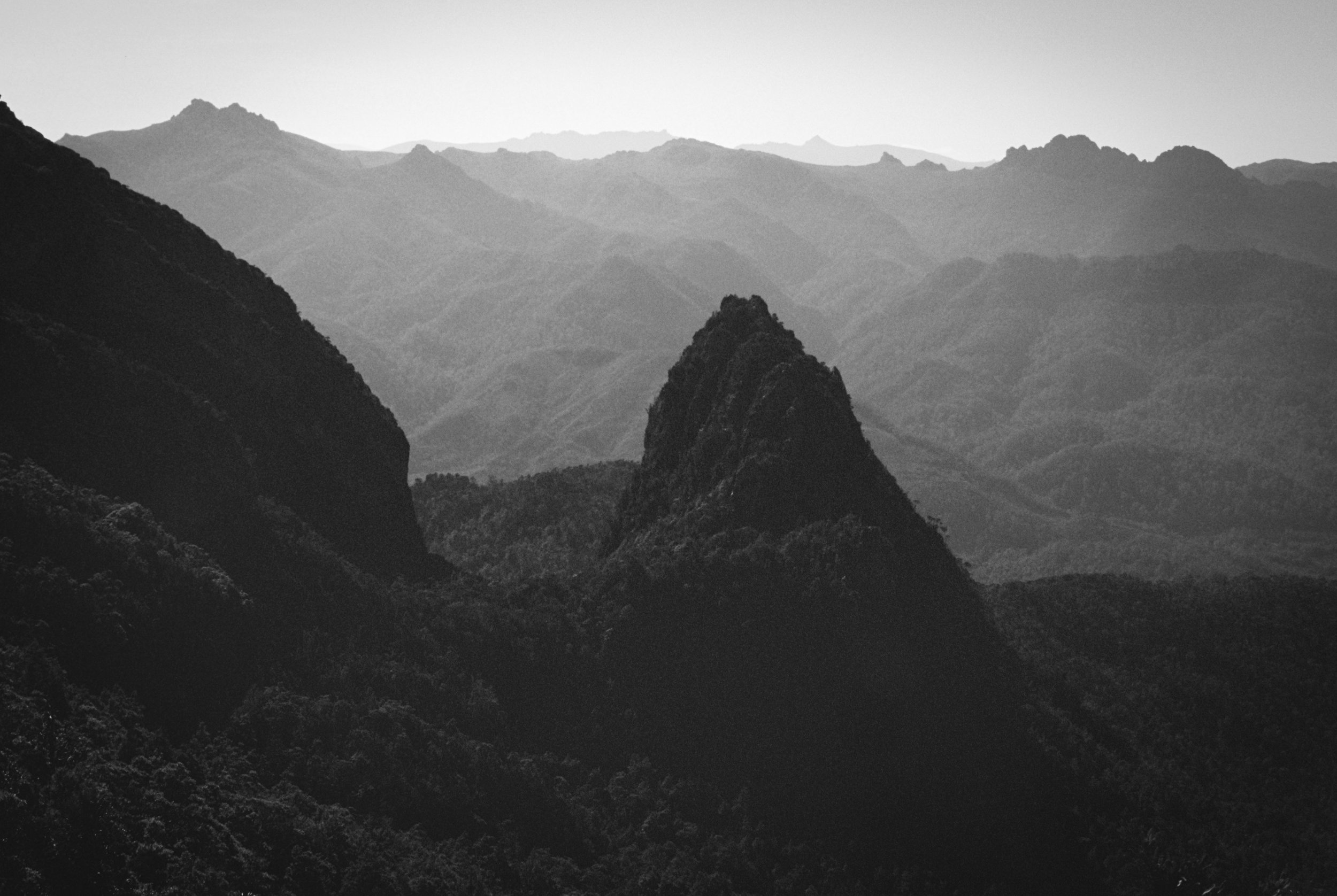
A photograph I recently rediscovered in my archives. The pinnacle in the centre is a feature called the Kriss and was climbed by J. Ewbank and A Keller in the 1960s.

Once again, I find myself changing the name of my blog, upon discovering that the name I have chosen has been taken by a previous publisher. (Boiling Billy Publications release 4WD-ing guides to outback Australia). Given that this publisher is a lot more prominent than my humble blog of 107 followers, I figured it’s best I change and avoid confusion down the track.

Nevertheless, out of these 107 followers, about 40-60 people click on the emails that I send out each week. This is a reasonable group of people, and it is to these people that I undertake the weekly work of writing for. That is right. This writing exists because of you, the reader. Isn’t that interesting?

And so I return to an old idea which has been just about scrapped. Scribbleton, or Scribble-Town, is a place where scribbles are not only accepted, they are the preferred currency. Scribbleton also happens to be the name of my very first blog, more than ten years ago, which did not survive for very long. Yet today, it returns!

Scribbleton. Snippets, small bits and pieces, strung together into a comprehensive story, landscape, imagining. A collection of impressions, formed into words, written down onto scraggly pieces of paper. Off-hand ideas that would never see the light of day otherwise.

Welcome to Scribbleton.

-A

The Witch’s Finger.

Alpha century

My own star is rising

Not shining

Just rising

A little every day.


Glacial lake near the Frenchman’s Group.

Dear Traveller

Welcome to the wilderness,

To a ‘brand new’ world;

Above you, thousand metre peaks may loom,

Overhanging with snow and ice,

It’s a different world you’ve entered,

Up here, in the kingdom of the clouds,


You can stand on the edge

And look into the abyss from where you’ve climbed from

Look back not in fear, loathing or muttering

But with a brave, and honourable look,

And see what clues you may find.

Stare below and see the path winding,

Spiraling, turning, twisting,

Jolting, falling, resting,

then finally climbing.

Dolerite columns in early winter, Central Highlands.

Buzzing with the rhymes

Dribble dribble

I wait for your knock

Dabble dabble

Why do I feel like this now?

Glaciated Landscape, Frenchman’s Group.

Kia Ora

This, you may have noticed,

Is a work not quite right,

Squiggle, squiggle

I’m writing between the lines;

Jiggle, jiggle

Do you read, do you read?

I’m stewing in the brine.

Fantasy fodder unfolded

Letters swam through the air;

Lurking lumps in shadows

Jumped on ponies at the fair,

Riding down, riding up

Looking through a mirror, I saw

Your bravery, my smile

Rising on the tide,

Aligning watches,

Ticking as one in time,

Your hair, my hands

Folding origami as mimes.


Then the banks crumbled in;

Floating on the froth was a tooth gapped grin,

Riding the river was a faceless chin

Trigger, trigger

I wag my tail and bark

Where is all this noise coming from?

The bone is only half chewed

The king’s crown is on the ground!


Happy to fly and catch the bullet;

While I wait out the tides,

Washing me in, washing me out,

Out to sea and in with the fishes.

Floating with tussock grass;

Drifting through the wind

Was a memory of a melody long gone...

The Panther of Tolmie

I saw the creature cross the road, but at first I wasn’t sure what it was.

In fact I’m still not sure what it was.

Are there black panthers living in the Victorian Alps?

We were riding our bikes from Mansfield to Whitfield, an obscure leg across the Victorian Alps. We found ourselves climbing up onto a reasonably tall range, perhaps up to around 1200m above sea level. We had entered an extensive and undulating plateau, giving home to native eucalypt highland forest. There was a small town we passed through, called Tolmie. From there it was a long stretch of road through the native forest, and eventually winding down the hill, to the town of Whitfield.  

We had started the descent, and I was ahead, Pat riding a few hundred metres behind me.  It was a fair gradient and I leant into the corners a little bit. The sun was out, but it was casting long shadows into the forest in the late afternoon light.

The road from Tolmie to Whitfield. Note that there is no large black cat visible in this photograph.

I hit a straight and looked ahead. About half a football field length ahead of me, I spotted a creature crossing the road. At first I thought it might have been a wallaby, because it was sort of bounding across the road. As I got closer, and that happened pretty quickly as I was traveling at high speed, I realised it couldn’t have been a wallaby, because it was completely black, and it was the wrong shape. It was bounding across the road on four legs.

 It must be a wild dog, my mind figured. I was now only a basketball field length away. However, as it hopped off the road, it extended a long black tail, that was even in width all the way to the end and was at least half the length of the entire body of the creature. If that tail belonged to a dog, it was no dog I had ever seen.

Then, the realisation hit me. The only thing that could have a tail like that and move like that is a cat. But this realisation posed a problem, because this cat was enormous. The ridge of its back would have reached up to my mid thigh if I was standing on the road right next to it. This was no ordinary feral cat. We are talking a cat that is nearly four times the size of a household cat. I got a clear view of it, and I was probably only about 20 metres away from it when it disappeared into the trees.

 I longed to stop and discover more about this creature, but gravity was calling me down the slope and I did not slow down as I crossed the tarmac where the paws of the creature had been only a few seconds ago.

Part of my mind still wasn’t convinced, but there was also an exciting elation. What if I had just seen a black puma? Then I realised that there were probably no black pumas anywhere in the world, let alone Australia.

Black panthers on the other hand, are a different matter entirely.

Church in Whitfield

We rolled into Whitfield and went straight to the pub there. We had just sent arguably one of the best descents of the whole trip, with or without any big cat sightings… We were grinning from ear to ear as we ordered a pint. Wearing our bikie clothes, we were dressed a bit differently from the majority of patrons at this very stylish pub, packed with weekend trippers from Melbourne, the big smoke.

The waitress behind the bar asked us about where we had come from, and we told her that we had just come down the hill from Tolmie. I asked her where she was from and it turned out that she was a local and had grown up in the area. I told her about my encounter with what appeared to be a large black cat. At the recounting of my sighting, her eyes went wide and she asked me:

’Are you shitting me?’

When I convinced her that I was simply recounting what I had seen, she said:

‘The local farmers near where I grew up, they’ve been seeing a big black cat for years. No one has shot it, or has even taken a photo of it. But we call it the Panther of Tolmie.’

The view from the Omeo Highway.

Now to add just one more dimension to this story, I shall note here that a few days later we rolled in to Bright and we caught up with our mate Pauly who had just managed to score himself a sharehouse after living in a van for a good long time. Pauly grew up on a sheepfarm, in the Victorian town of Strathbogie. When I told him the story of my sighting of the Panther of Tolmie, he just shrugged his shoulders and said “Back around where I grew up, we had the Strathbogie Panther.’

 So that was settled then. The creature I had seen cross the road must have been a black panther. Even if one day it turns out that the Panther of Tolmie is an unusually shaped large, black dog.

The back of Mt Buffalo.

The Horn of the Buffalo

Mt Buffalo is a bastion of granite that stands apart from the surrounding mountains of the Victorian Alps.

Pat Kirkby rolling across the tarmac on the Buffalo Plateau.

It was day 10 of our trip from Hobart to Canberra. We had the luxury of staying in the home of a person we didn’t know and who wasn’t there to host us, but gave us their welcome nevertheless, through the connection of a mutual friend. We simply rocked up to this house in Porepunkah, found the keys in the described spot, and made ourselves at home. There is something to be said for being able to wash smelly clothes and smelly armpits with hot water. It’s only when we are deprived of certain luxuries that we fully recognise how glorious they are! There was a huge level of trust on behalf of the owner of this abode to give two smelly cycle tourers free reign of his home, and we showed our appreciation by leaving the place precisely how we found it, plus left a bottle of wine, a block of chocolate and a little thank you note expressing our gratitude.

So many shapes and stories in this granite.

We had to stop at the Porepunkah Pantry before tackling the climb up to Mt Buffalo. I had made it my personal mission to identify the best sausage roll along our route through the high country towns and here was yet another opportunity. At some point during our trip I made a joke to Pat that we should call our ride ‘Tour de Sausage Roll’. Of course, Pat abstained and I don’t think he had a single sausage roll the whole trip, preferring his trustworthy carrots dipped into hummus. I would say the Porepunkah Pantry sausage roll was second best only to the sausage roll I ate in Mt Beauty, at a cute little café whose name I cannot quite remember. And so the question of the best sausage roll of the Victorian High Country may remain shrouded in mystery, similarly to the origin of all the big cat sightings in that part of the country…

A boulder problem on the Leviathan.

We hit the ascent at around 11AM, and there were quite a few middle aged men in lycra who overtook us on their roadbikes. It seemed that we have arrived to the bike riding capital of Australia, with Bright only a few kms down the road. The distance of the climb up to the Chalet was 20km in total, and it was a very steady 5% gradient the whole way. This meant that we gained about 50m in elevation for every kilometre that we rode. We had left our panniers with all our overnight gear at our unknown friend’s place in Porepunkah, so we cruised up this hill in about 2.5 hours. The gradient never really picked up, and I think we only pulled over once to have a very quick snack stop. The sun was out and we were feeling good when we topped out the hill and rolled in to the chalet and the main tourist area.

Perched on the top of the granite cliffs, we could feel the updraft that so many flyers utilise here, the valley of the Owen River splayed out before us. The launch platform for the hang gliders was a terrifying ramp to nowhere, and we could barely imagine the guts required to launch off that thing into thin air! While we ate our lunch there were school groups milling about, waiting their turn for abseiling, and in particular one old geezer who called us mad multiple times and said he was puffed after walking 100m from his motorbike to the lookout. We restrained from making a reply but thought that some exercise and lack of smoking may be of some benefit to this gentleman.

Our objective for the day was to ride all the way to the end of the road and climb the high point of the Buffalo range, called the Horn. I came to call it with some affection, ‘The Horn of the Buffalo’. The road from the chalet weaves across the alpine plateau, dodging a lake, and giant granite boulders, to climb up to a high pass near the Cathedral, and passing this high point in the road, we popped around the corner and there it was, the Horn of the Buffalo, revealed from one moment to the next in its full glory; a conical peak, rising well above the plateau surrounding it, and with a distinct white boulder forming its very summit. Seeing the Horn up close for the first time made me pull over, stop and stare for a couple of minutes. The skyward thrust of this peak drew the eye like a moth is drawn to the flame, elevating the spirit of the beholder in an upward spiral.

Behold! The Horn of the Buffalo!

We staggered up to the summit after parking our bikes at the end of the road, and took in the view that lay around us. From the Cross Cut Saw to Mt Hotham, the Victorian Alps lay surrounding us. The burnt plateau of the Buffalo directly below our feet, and the sun high up in the blue, blue sky.  Giant granite boulders scattered across the golden plateau, remnants of glaciers and ice ages, distant memories passed.

On our descent we pulled in to check out a giant floating boulder called the Leviathan. Pat and I disagreed on the pronunciation of it, but we agreed that it was a place of some spiritual significance. Being an overhanging rock shelter, the energy permeating the place had an undeniable human presence, stretching back for aeons. We took turns to lie beneath the floating block weighing thousands of tonnes on a wavy rock that we felt people must have slept on for thousands of years.

Later a friend of mine who lives in Bright sent me a paper written on the Aboriginal people of the Mt Buffalo area (“Mogullumbidj: First people of Mount Buffalo by Jacqui Durrant’). Apparently the Mount Buffalo area gave place to ‘sages of the rocks’, in other words hermits, who relied on gifts from visiting tribes to survive. These stone ‘druids’ would come up with sacred dances and songs, which they would pass on to their visiting peers. It is worth noting that Mt Buffalo is the sole location of the Sallow Wattle (Acacia phlebophylla), which contains high levels of the psychedelic drug DMT (dimethyltryptamine).

The descent from the chalet to Porepunkah was a dream ride. The descent is unbroken for 20km and the road surface good, with the severity of the corners clearly indicated by speed recommendation signs. After what seemed like going downhill at high speed for a long time through forest, the view opened up and I was surprised to see that I was still very high above the valley and so had most of the descent to go still. And it went on and on, corner after corner, as we glided effortlessly back down the hill, and unrolled all the potential gravitational energy that we had stored up on our way up during the climb.

It was the greatest ride either of us had ever done, to ride from Porepunkah up to the Horn of the Buffalo and back in a day. And through this ride, we had formed a close connection with the landscape, and the history embedded in it.


The view from the Horn, looking down on the Buffalo Plateau. Cathedral in the distance.