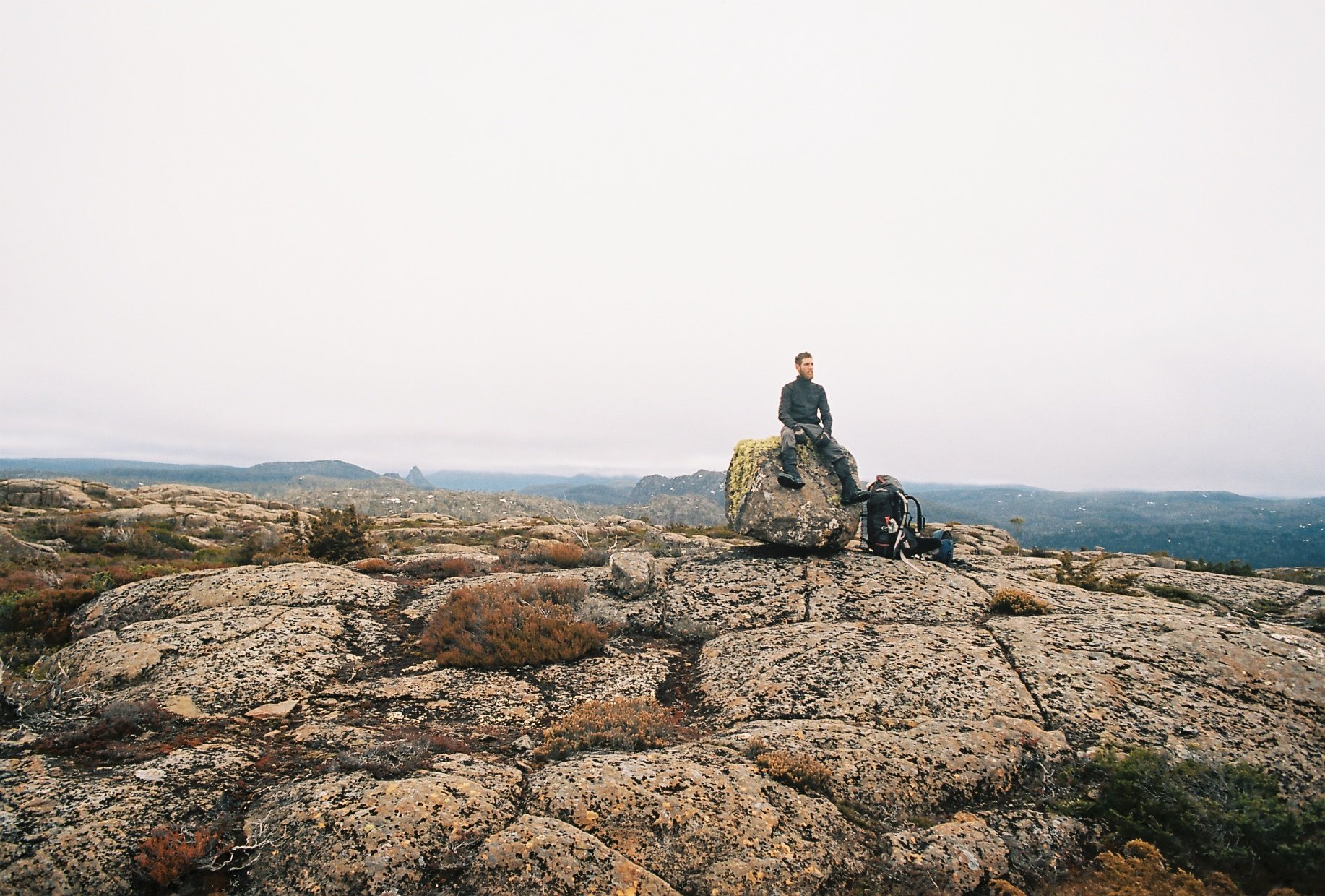
Land of the long white cloud…

White crowned mountains, rising out of the sea. This was my first vision of New Zealand, the place I’ve dreamt of visiting for so many years. I was sitting on an aeroplane, looking at ‘the Mirage of the Ocean’, Kā Tiritiri o te Moana, also known as the Southern Alps.

The Southern Alps, Kā Tiritiri o te Moana. Pentax MX, 50mm, Kodak Image Pro 100. April 2024.

The first people, the Māori, came to New Zealand from Polynesia using canoes and navigated by the currents, wind, clouds and stars. Aotearoa was the name they gave to the North Island, which they discovered and settled first, and this means ‘land of the long white cloud’. It was a practical name that helped these early explorers of the ocean find their way to this island. Later, after European settlement, Aotearoa became the collective name for both North and South islands together.  Today, the Māori name given to the North Island is Te Ika-a-Māui (the fish of Māui) and for the South Island it is Te Waipounamou (waters of the greenstone).

Pebbles on the shore of Lake Te Anau. Pentax MX, 50mm, Kodak Image Pro 100. April 2024.

To follow through with my aim of cycling the length of New Zealand in the least direct route possible, I figured I’d kick off my trip with a six day side trip from Queenstown to Milford Sound, Piopiotahi. I was blessed to have a place to stay upon my arrival in the busy tourist town of Queenstown, in the lovely household of a bunch of mad keen mountain bikers, who lived on a rather large hill in Fernhill. Their place gave me a good base to commence my NZ operations from. With a bit of beta from Annie, Dan and Brook, I had booked my spot on the Earnslaw, a vintage steamship that travels the length of Lake Wakatipu, and I got dropped off at the high country cattle station of Walter Peak, from where I could take the quiet back-country road towards Mavora Lakes, then onto the highway towards Te Anau and eventually to Milford Sound.

View from the the Earnslaw, a steamship built in 1912. Pentax MX, 50mm, Kodak Image Pro 100. April 2024.

The 110km stretch of road from Te Anau to Milford Sound is the only sealed road into Fiordland National Park, and it’s the road that’s taken by thousands of visitors every day, in and then back out. There is very limited overnight accommodation at the Sound itself, so most people will camp along the road then do a day trip in, with the traffic often congesting around the Homer tunnel. I was no different; I chose to camp at the last available Department of Conservation (DOC) campsite, then did a day trip to Milford Sound, riding about 84 kilometres there and back, with about 1800m elevation gained and lost. I left Cascade Creek campsite at 7:15am to beat the traffic, and it was a bit chilly on the fingertips and the toes.

Eglington Valley. Pentax MX, 50mm, Kodak Image Pro 100. April 2024.

South-West New Zealand (Te Wahipounamou- ‘land of the greenstone’) is a heavily glaciated landscape; steep mountains rising up from wide, U- shaped valleys, with thick beech forest and sub alpine scrub blanketing the near vertical slopes. As I rode along this road, I felt as if time itself towered over me. Long, thin waterfalls cascaded down the mountainsides; there was just so much water around, and it hadn’t really rained for about a week. I had a dream the night before about a giant boulder rolling down a steep hill, leaving a path of destruction in its path. Riding along the road the next day, I saw a mountainside that had an entire stripe cleared from it as if a giant boulder had rolled downhill there. It was an uncanny coincidence, and made me wonder whether the landscape was talking to me through my dreams, whether certain features of this place were calling me to it.

Landslide or giant boulder rolling downhill? April 2024, Pentax MX, 50mm, Kodak Image Pro 100.

Let’s talk about the Keas. This near mythical bird seems to feature heavily in most people’s NZ stories. What we know of them is that they are very beautiful, with bright orange feathers that are only revealed on the underside of their wings while in flight, that they have a long hooked beak, also that they are very clever and that they are very annoying.  I have heard countless stories of theft, destruction, chaos and mayhem caused by these birds.  I was equally looking forward to my first Kea encounter as I was dreading it. Will they shred my tent? Will they try to take the tyres off my bike? Will they steal my flint or another essential item?

Doing what the Keas do best. Pentax MX, 50mm, Kodak Image Pro 100. April 2024.

And so my first Kea encounter was no surprise, even somewhat stereotypical. I was waiting outside the Homer Tunnel on my way out to Milford Sound, and there was a Kea, on top of a campervan, trying to pull the rubber seal off the van’s window. Meanwhile, the tourist inside was taking a video on her phone. Classic Fiordland moment. I partook by taking the obligatory photo of the Kea doing what they do best.

Mitre Peak, rising up from Milford Sound. Pentax MX, 50mm, Kodak Image Pro 100. April 2024.

I descended the long hill from Homer tunnel down to the sea with much joy and elation; although I did get miserably cold on the descent. Upon getting to Milford Sound I figured I’d just find somewhere peaceful to sit and appreciate the landscape. Except there wasn’t anywhere! It’s an absolute zoo out there! There are the boats, the planes, the helicopters, the buses, and thousands of bustling tourists seeking their experience. In the end I did find a bench right out at the end of the jetty, where I sat and ate my snacks and waited for the sun to climb over the hill, but in the end I got too cold and decided it was time to ride back up the hill. I was left wondering about that line of balance between development and preservation and whether this place had crossed that line long ago.

Upper Eglington Valley, Pentax MX, 50mm, Kodak Image Pro 100, April 2024.

The crux of the day trip to Milford Sound was negotiating the Homer tunnel on the return. This tunnel was completed in the 1950s and cuts through the Darran Mountains beneath Homer saddle. It is 1.2km long, and has a steep gradient. It is also one lane, which means there is an automatic timer and traffic lights to ensure one way traffic. On the way in I had no trouble, for the downward slope meant I could easily keep to the speed limit of 30km/h. But on the return, I would only have a few minutes to get back through before vehicles started coming the other way!
In the end, I befriended a French backpacker while we were waiting for the lights at the tunnel entrance and he agreed to give me a tow. So I held on to the side of his car (with his passenger window rolled down), locked in my right arm and steered the bike with the left and got a free ride through the tunnel. It might seem like the easy way through but I can tell you, my right arm got so pumped about halfway up from holding on that I had to fight to hang on! It was a good trick however, and it worked: I didn’t hold up the traffic and I didn’t have to deal with oncoming traffic inside the tunnel.

The touring rig (without panniers) at Cascade Creek campsite, after day ride to Milford Sound, Piopiotahi. Pentax MX, 50mm, Kodak Image Pro 100. April 2024.

 The other highlight from my first week in Aotearoa was discovering a new podcast (Huberman Lab) on the recommendation of my host in Queenstown, Annie Ford. There was a passage from this podcast that stood out, and it went along something like this: ‘When you do something you don’t want to do, a part of your brain, called the anterior mid-cingulate cortex gets bigger… People who are athletes, people who have overcome hardships, people who live long, this part of the brain is quite big. Scientists are starting to think of the anterior mid-cingulate cortex not just as one of the seats of willpower, but perhaps as the seat of the will to live’.

Gondwanan rainforest near Milford Sound. Pentax MX, 50mm, Kodak Image Pro 100. April 2024.

Here was an idea I could mull over during my endless hours of riding solo across New Zealand. When I was suffering on my bike and doing the thing I really didn’t want to do, riding through the rain, riding up the endless hills, hungry and unwashed, I could console myself through knowing that I was actually strengthening my will to live!

The Hollyford River. Pentax MX, 50mm, Kodak Image Pro 100. April 2024.

Often there is a threshold which we have to push ourselves through to unlock a new level of performance. There is something to be said for pushing beyond fatigue. Ride a bike till you feel you cannot ride anymore, and then ride another fifty kilometres. At some point, our body and our brain switch over and we go from being exhausted to feeling fine to keep going. This is when we know we have reached and crossed a threshold, the boundary between what we think is possible and what is actually possible.

Walter Peak Station. Pentax MX, 50mm, Kodak Image Pro 100. April 2024.

-A.S. Wanaka, 11/4/2024

Charging all batteries- A Comedy of Errors

Things don’t always go how we expect them to go.

The arch at Stackys Bight, Flinders Island, Pentax MX, Portra 800, Jan 2024.

I was so convinced that my final week of preparation in the lead up to my trip to New Zealand would be relaxed, leisurely. For once, the few days leading up to a big trip would not be a stressful bottleneck that left me wishing I was in the jaws of a giant anaconda instead. For once, things would go to plan and there would be no rush, no chaos, no dramas.

But it doesn’t take much to go from being in a state of total control to total chaos. In the space of 48 hours, I had stuffed up a big bank transfer, then my car broke down, and then my bike I was planning to take to NZ was also out of action. Stress, panic, chaos!

And here I thought I’d be spending my final week before my bike touring trip to New Zealand sipping hot chocolates, resting and catching up with my friends. Instead my entire week became a divine comedy of errors, and the cruisy week I anticipated became the opposite.

Instead of building my reserves, I had lost two kilos by the end of the week. But the main thing was accomplished; my bike was fixed, and then it was in a box, ready to fly. I even managed to charge all of my batteries. My car was still at the mechanic and I would have to call the ATO from New Zealand, but they are minor details in the scheme of the big picture.

Castle rock, but I think it should be called happy whale rock. Flinders Island. Pentax MX, Portra 800, Jan 2024.

All of these little hiccups were exactly that, minuscule mistakes, errors that a reasonable level of resourcefulness and a bit of help from your friends can sort out. My housemate Kelsey has my eternal gratitude for lending me her van while my car was broken down so I could go to work, and also for driving me to the airport at the completely unreasonable hour of 3:40AM on Easter Monday.

And so I stepped on a plane to fly to New Zealand. My bike was coming with me and I had two months to cycle from Queenstown to Auckland. My plan? Cycle the least direct route possible.

-A.S. - Te Anau, NZ, 6/4/24

Marshall Bay, Flinders Island. Pentax MX, Portra 800, Jan 2024.

Mending the broken helmet

“A reanimated world is one in which spirit and matter are not just equally regarded but recognized as mutually dependent. The great task of this late modern era is thus to bring together what the spiritual preoccupations of the old world and the material focus of the new world have torn apart. The psyche shows us this dependency whenever a person or group attempts to embrace one without the other, in the way the neglected side begins to rule the unconscious… But the earth process itself suggests we rediscover nature as spirit as well as understand it as matter — nature as presence, intelligence, and root source of inspiration and imagination… Both mind and earth are calling for perspectives capable of marrying these dimensions of reality.” - Carl Jung

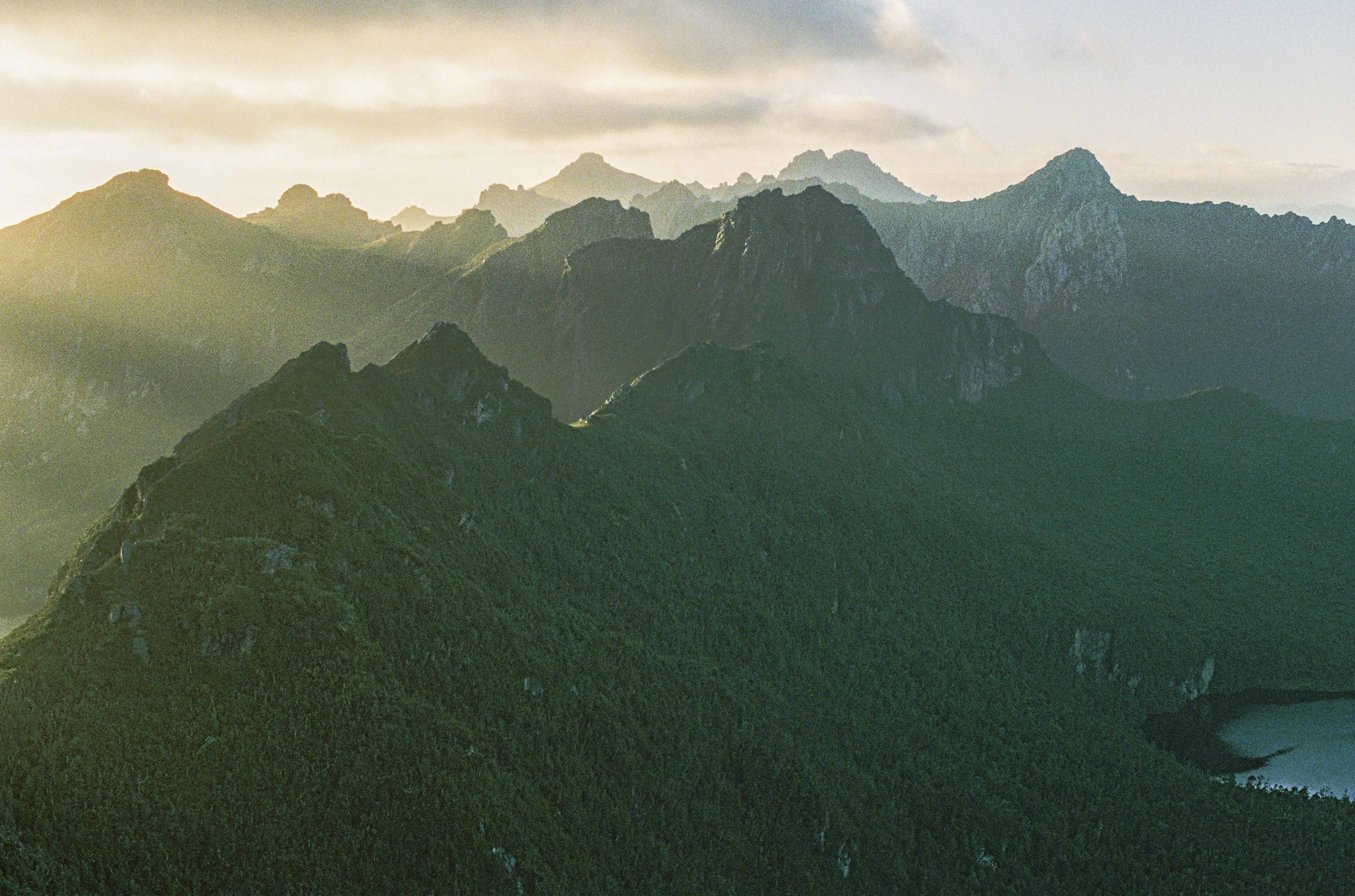
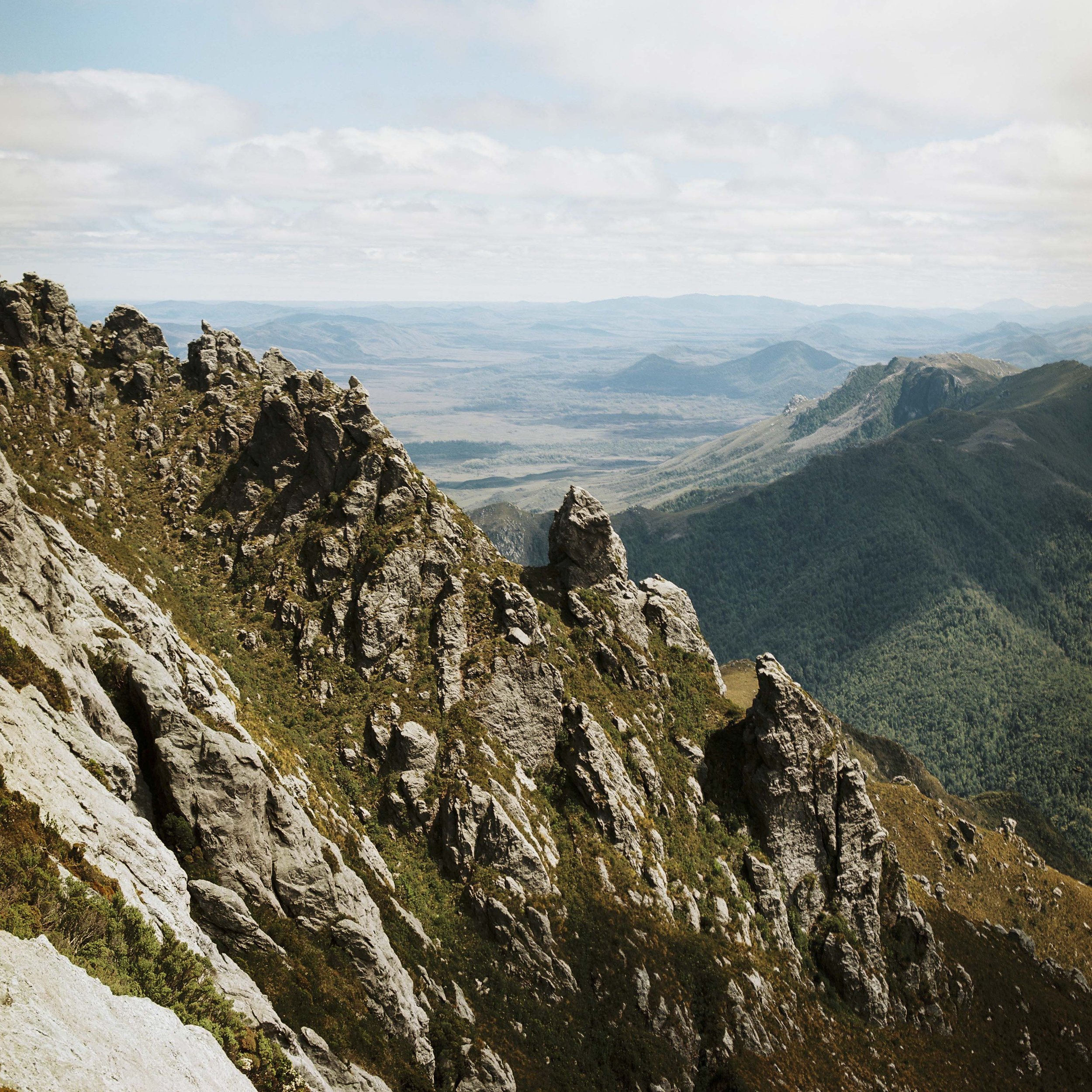
Western Arthurs skyline, Pentax MX, 50mm, Portra 800. Feb 2024.

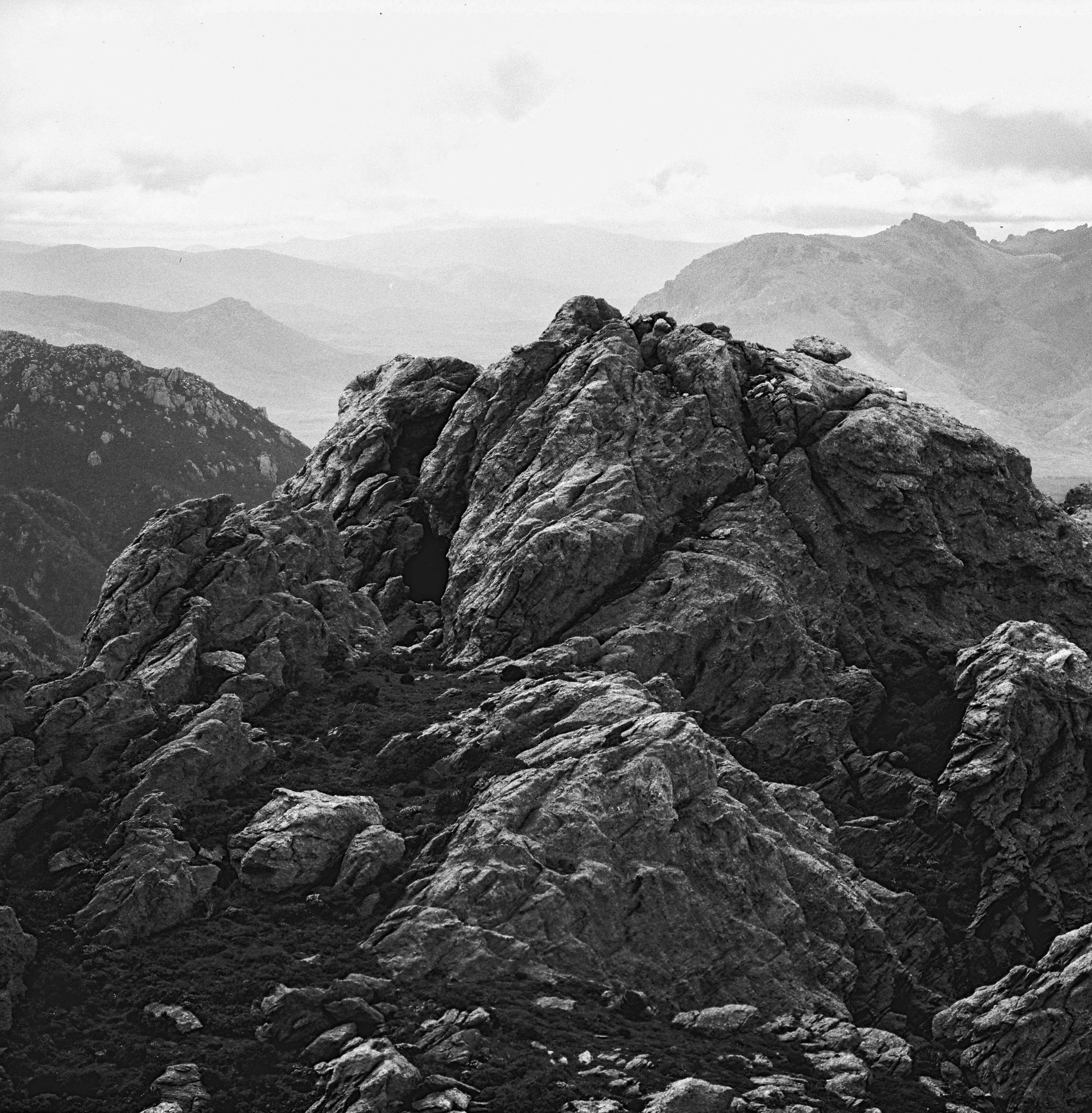
Misty morning in the Arthurs. Pentax MX, 50mm, Portra 800. Feb 2024.

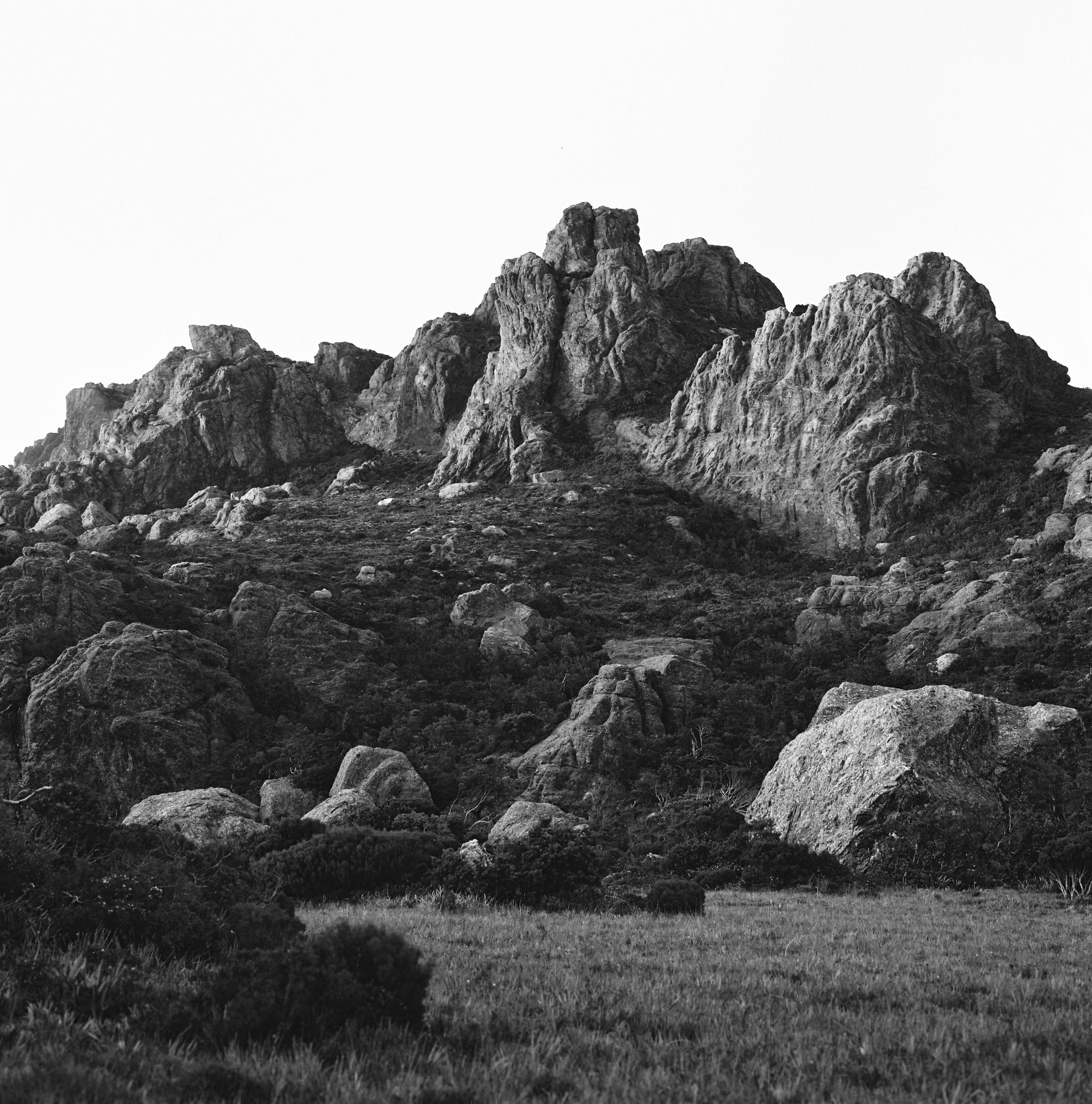
Swirling mist. Pentax MX, 50mm, Portra 800. Feb 2024.

Ship without a mast...

“And when it happens that you are broken, or betrayed, or left, or hurt, or death brushes near, let yourself sit by an apple tree and listen to the apples falling all around you in heaps, wasting their sweetness. Tell yourself that you tasted as many as you could.”

-The Painted Drum, Louise Erdrich.

Banksia Marginata, SW Conservation Area. Hasselblad 500CM, Planar 80mm, f11/30. Ektar 100.

Lewis Plains, SW Conservation Area. Hasselblad 500CM, Sonnar 150mm, f11/15, Portra 400.

Huon Pine, Conder River. Hasselblad 500CM, f11/4 - 80mm Planar, f11/8 Sonnar 150mm, Portra 400.

Along the old road to the lighthouse...

“The greatest enemy of authority is defiance, and the surest way to undermine it is laughter.”

-Hannah Arendt

Gorge, SW Conservation Area, f16/125, Ektar 100, Hasselblad 500CM, 80mm Planar, Dec 2023.

Burnt buttongrass. SW Conservation Area, f8/250, Ektar 100, Hasselblad 500CM, 80mm Planar, Dec 2023.

D’Aguilar Range, f11/60, Ektar 100, Hasselblad 500CM, 80mm Planar, Dec 2023.

The Way of Dragons

“All that is of dragons belongs only to dragons.” -Robin Hobb

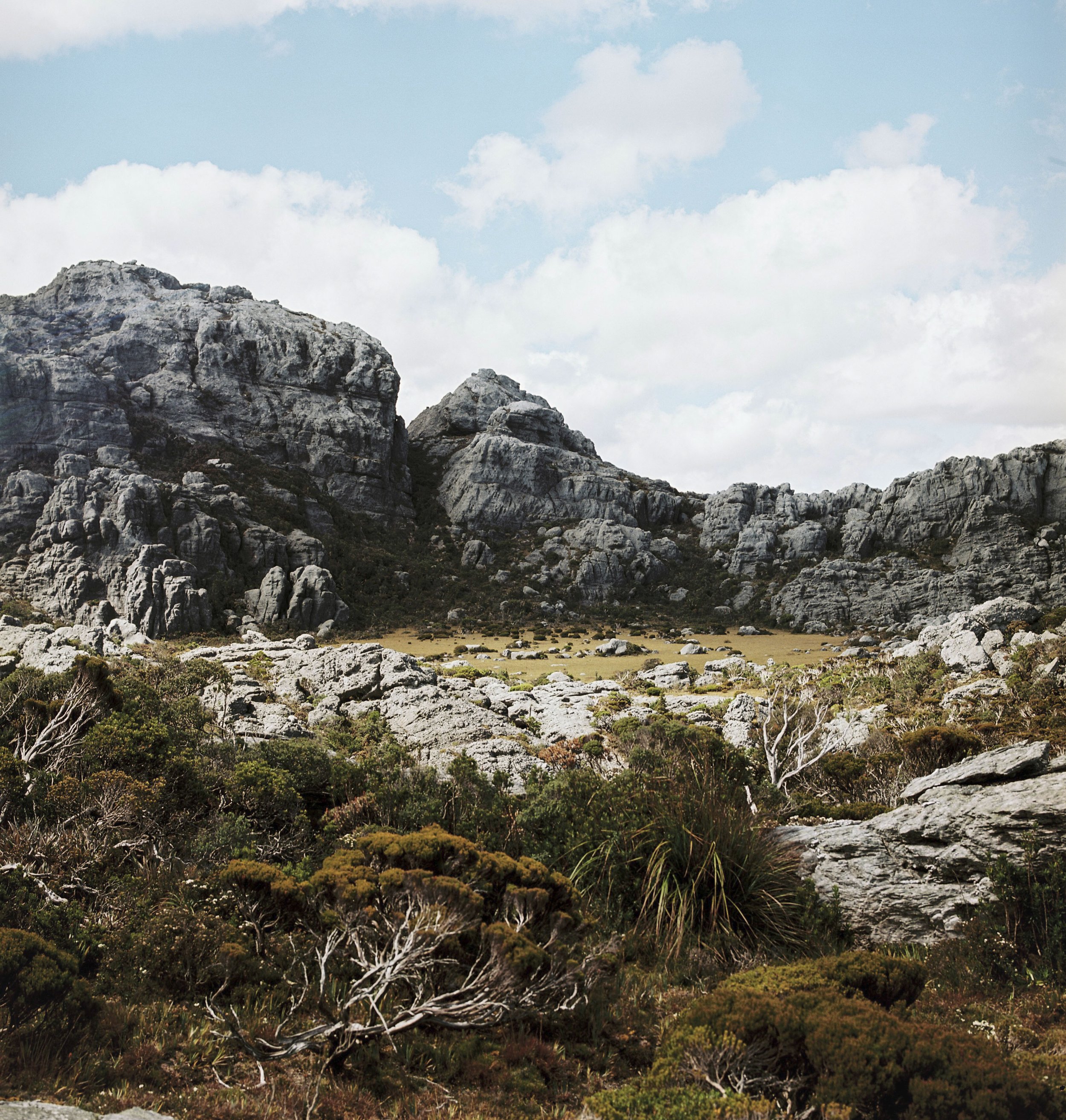
The Arena, Hasselblad 500CM, Carl Zeiss Planar 80mm, f8/30, Ektar 100, Nov 2023.

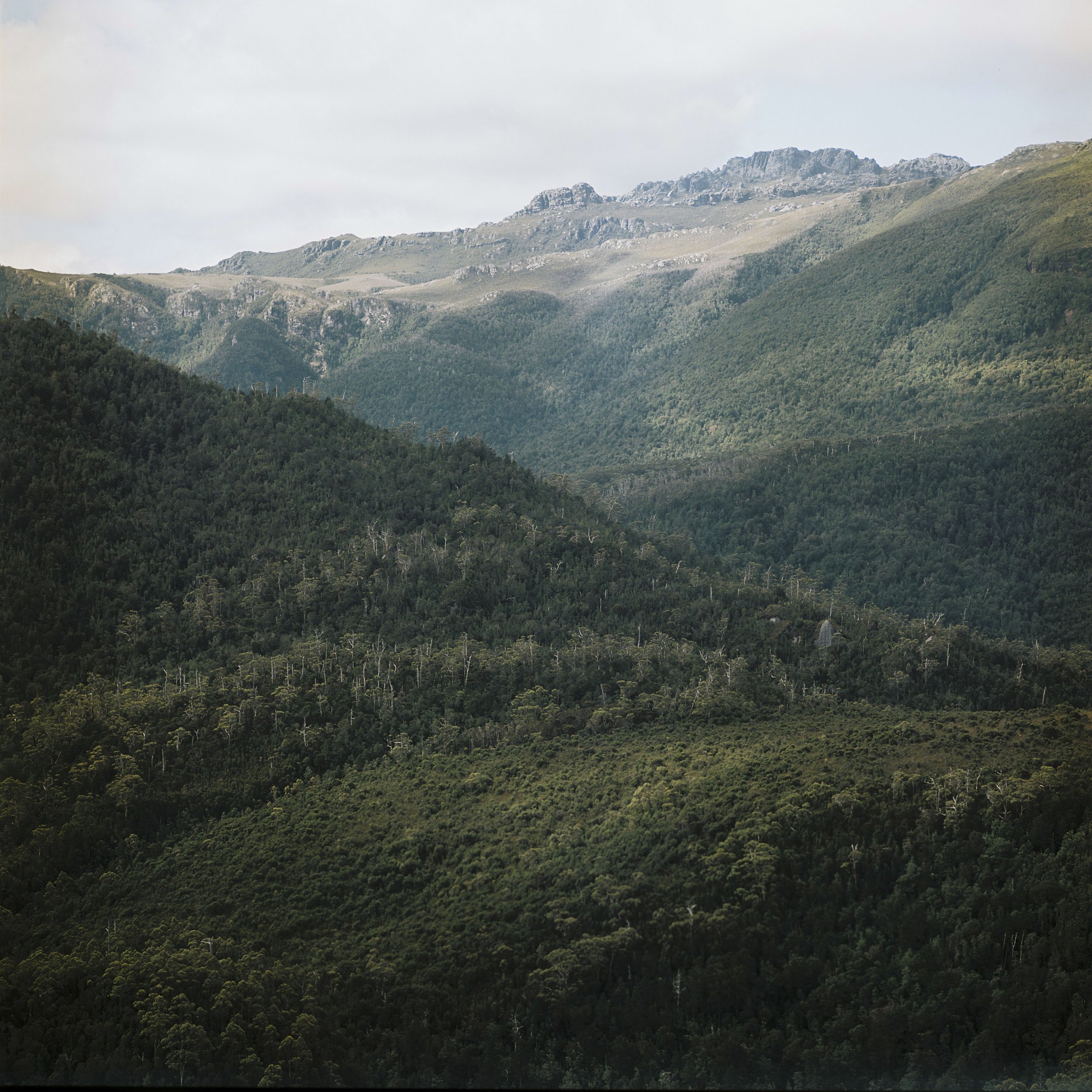
Mt Robinson. Hasselblad 500CM, Carl Zeiss Sonnar 150mm, f11/60, Ektar 100, Nov 2023.

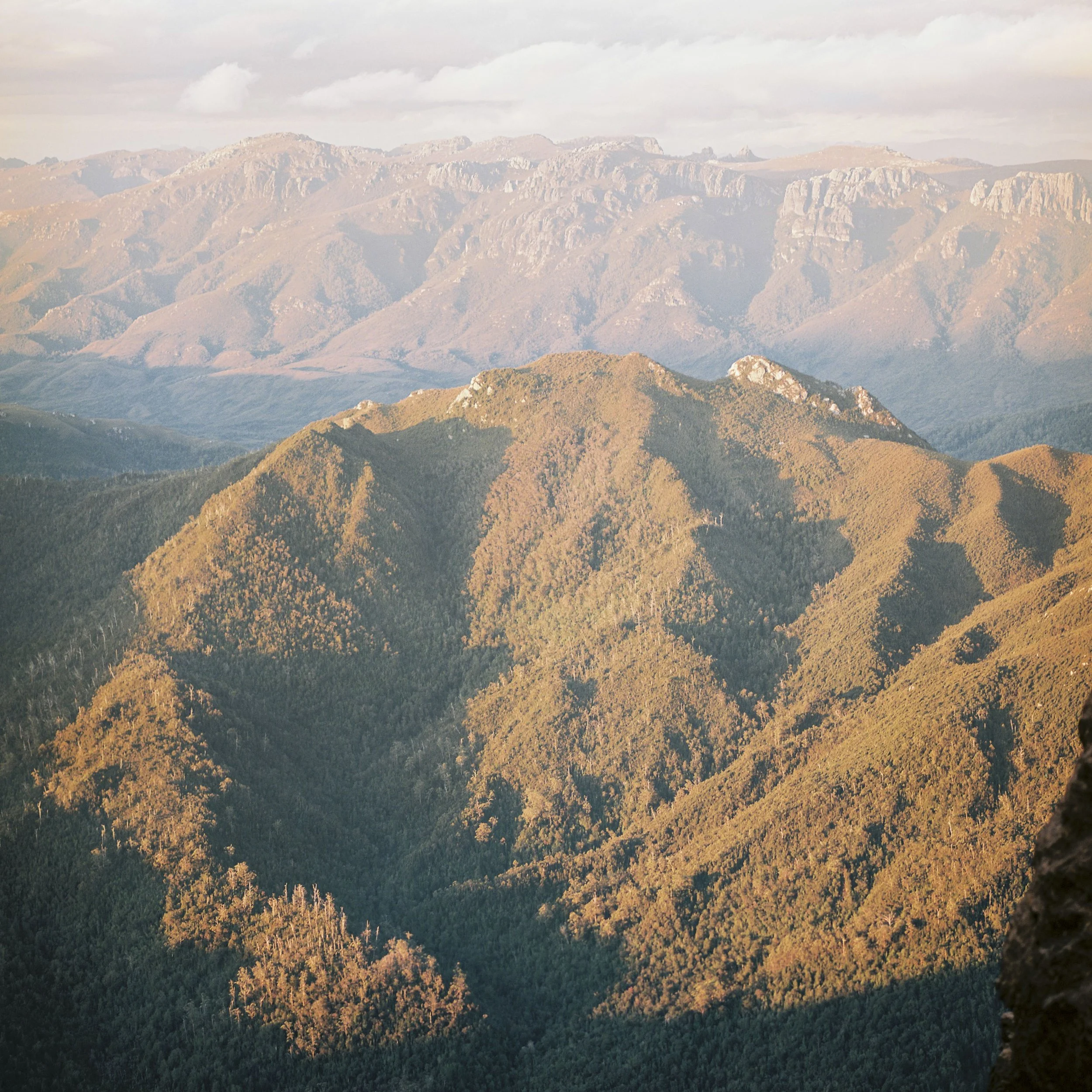
Late light in the SW. Hasselblad 500CM, Carl Zeiss Sonnar 150mm, f11/15, Ektar 100, Nov 2023.

The narrowing path

“And the truth is that as a man’s real power grows and his knowledge widens, ever the way he can follow grows narrower: until at last he chooses nothing, but does only and wholly what he must do…”

-Ursula K Le Guin, The Books of Earthsea

Only one way to go. Hasselblad 500CM, Carl Zeiss Sonnar 150mm, f5.6/125, Ektar 100, Nov 2023.

The Arena, Hasselblad 500CM, Carl Zeiss Planar 80mm, f8/60 Ektar 100, Nov 2023.

Cliffs. Hasselblad 500CM, Carl Zeiss Planar 80mm, f8/125, Ektar 100, Nov 2023.

Grayscale

People come, people go,

The rock stands still,

Though the wind may blow.

-A.S. 21/01/2024, Lenah Valley

GB. Nov 2023. Hasselblad 500CM, Carl Zeiss Planar 80mm, Ilford Panf 50+, f11/30.

The Den, Nov 2023. Hasselblad 500CM, Carl Zeiss Sonnar 150mm, Ilford Panf 50+, f5.6/125.

Summit Stones, Nov 2023. Hasselblad 500CM, Carl Zeiss Planar 80mm, Ilford Panf 50+, f11/4.

Fury Gorge, The Call of the Abyss: Part IX The Return

When we are in the bottom of an abyss, we are already past the halfway mark. Even though the bulk of the labour is still ahead of us, there is no decision to be made. We must climb up and extricate ourselves. There is no choice, if we wish to return.

The paddy made tent on Little Plateau. April 2023, Hasselblad 500 CM, Ektar 100.

I started early the next morning. I climbed through a mixture of tangled rainforest and tea trees. In three hours, I gained about one kilometre of horizontal and about four hundred metres of vertical distance. I followed the ridge NE for another hour, and that brought me to a high point, with an open buttongrass lead in front of me.

As the view slowly opened up around me, I was able to appreciate the dramatic nature of the landscape I was in. The western end of the Cradle Plateau terminates in the gorge of Sutton's Creek, which rivals Fury Gorge in steepness and scale. I saw crumbling scree slopes of quartzite, and thick rainforest with patches of the golden fagus cloaking the precipitous slopes dropping down to the river.

The unfortunate turn of events for Hellyer and his men was that after they climbed out of Fury Gorge, they descended to the gorge of Sutton's Creek. I imagine they didn't realise that the plateau they were on connected to Cradle Mountain or the depth of the snow was too great for them to make progress through it and they were forced to descend again. Camping down the bottom of Sutton's Creek was the low point of their expedition. 'It now became a serious question whether we should extricate ourselves at all...'. The next day, Hellyer's party crossed a creek that was swollen by the snowmelt and he noted: 'a torrent that made us start, its fury was beyond anything we could conceive of water'. Perhaps it is from this reference that the Fury River got its name?

The old paddy made tent. April 2023, Hasselblad 500CM, Delta 100.

It was the 21st of November, 1828, the day they all thought they would perish. Instead, Hellyer and his men climbed out of Sutton's Creek, crossed Hounslow Heath and reached the more sheltered Cradle Valley. 'We felt we were in the land of the living once more... In fact it was an escape from a snow prison.'

For me, it was the 25th of April, 2023. The weather was fine, and I had no intention to descend to Sutton's Creek. I was knackered, running low on water and I hoped I was going the right way. I was still on an unknown ridge to me and unable to see where it was leading me. The open buttongrass had turned to tea tree thickets, and I was making excruciatingly slow progress.

Eventually, I reached a rocky high point. I had been climbing for seven hours. It was here that the view fully unfolded around me. And I finally sighted that the little finger of plateau I was on connected to the Cradle massif. I wouldn't have to descend to Sutton's Creek. Relief washed over me. I had climbed out of Fury Gorge!

I took one last look down, and said goodbye to my old friend.

It will be some time before I visit the Fury River again.

The Fury Valley, from Little Plateau. April 2023, Hasselblad 500 CM, Portra 800.

Fury Gorge, The Call of the Abyss, Part VIII: The Fury River

It was five months later, in April 2023 when I was able to undertake a second attempt to visit the Fury River.

The route across Fury Gorge, similar to the line Hellyer and his men took in 1828. Spot the open buttongrass patch? Hasselblad 500CM, Portra 800, April 2023.

This time, I started from Cradle and allowed four days. The philosophy was the same; solo, no maps, no comms, just a compass, but this time, being late autumn, I opted to take a head torch due to the shorter days. I also took a different shelter this time, a Paddy made 'Golden Tan' canvas tent that was made about sixty years ago and originally belonged to Ian Boss-Walker, who wrote one of the first guides to the 'Reserve', titled 'Peaks and High Places'. This tent was probably not that different from the kind of tent Hellyer and his men would have used all those years ago.

The old paddy made tent. Hasselblad 500CM, Portra 800, April 2023.

It was a long day to reach Pencil Pine Bluff from the trailhead and I walked the last hour in the dark. The next morning I was standing on the edge of the precipice, looking into the abyss. The Fury River was down there, at the bottom, waiting for me. The scale of the landscape made me feel so small. In some ways, the most difficult part was to make the decision to descend. Some places we do not go because we want to go. Some places we go because we have to go.

Morning mist rising from Pencil Pine Bluff. Hasselblad 500CM, Portra 800, April 2023.

I opted for a direct spur heading straight for the only open buttongrass patch in the gorge I could see. As I descended, I traveled through time, from the deep past to the present. The top of the gorge contains rock that the river cut through millions of years ago. The bottom is freshly cut and still being shaped by the flow of the river.

About a third of the way down I entered a dry eucalypt tea-tree forest and was forced to skirt around quite a few cliff bands. The descent took about three hours in total. I lost 750m of elevation. About a hundred metres from the river, the vegetation turned to tangled rainforest. And then, there it was; the Fury River! I waded across without incident; the water came to just below my knees. I set up camp in a small buttongrass patch, with the walls of the gorge towering over me. I drank from the Fury River.

I felt like I was a very long way away from home.

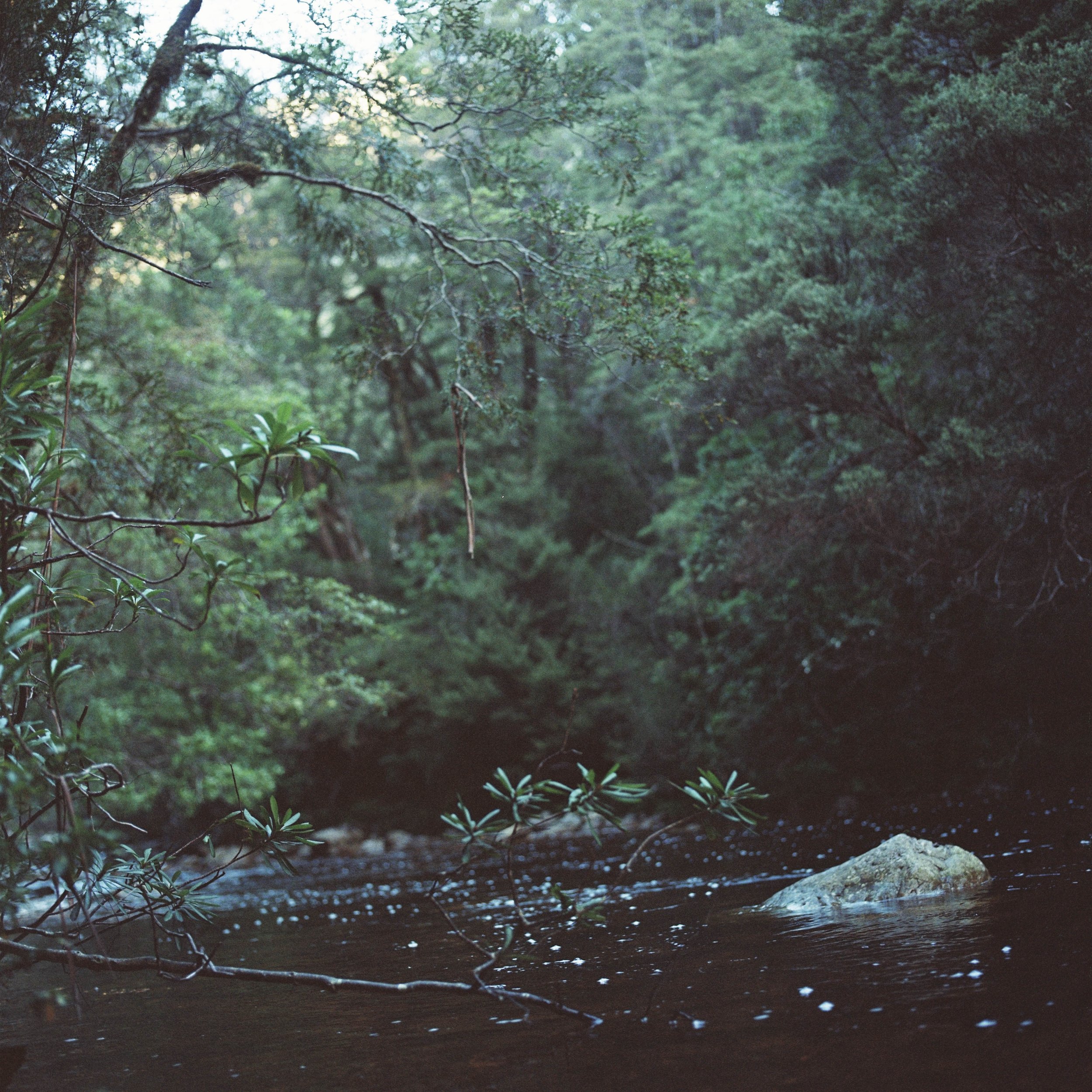
The Fury River. Hasselblad 500CM, Portra 800, April 2023.