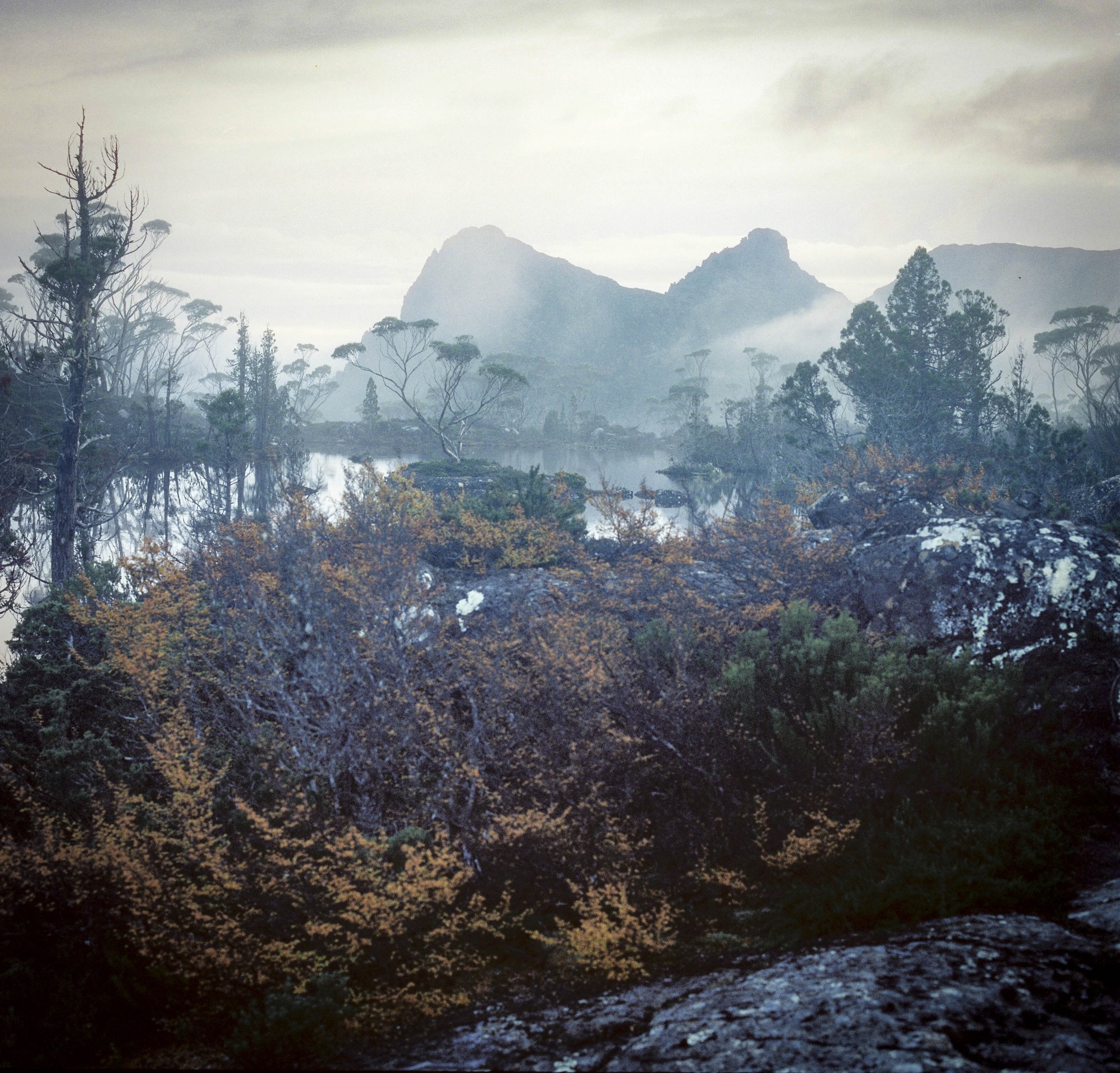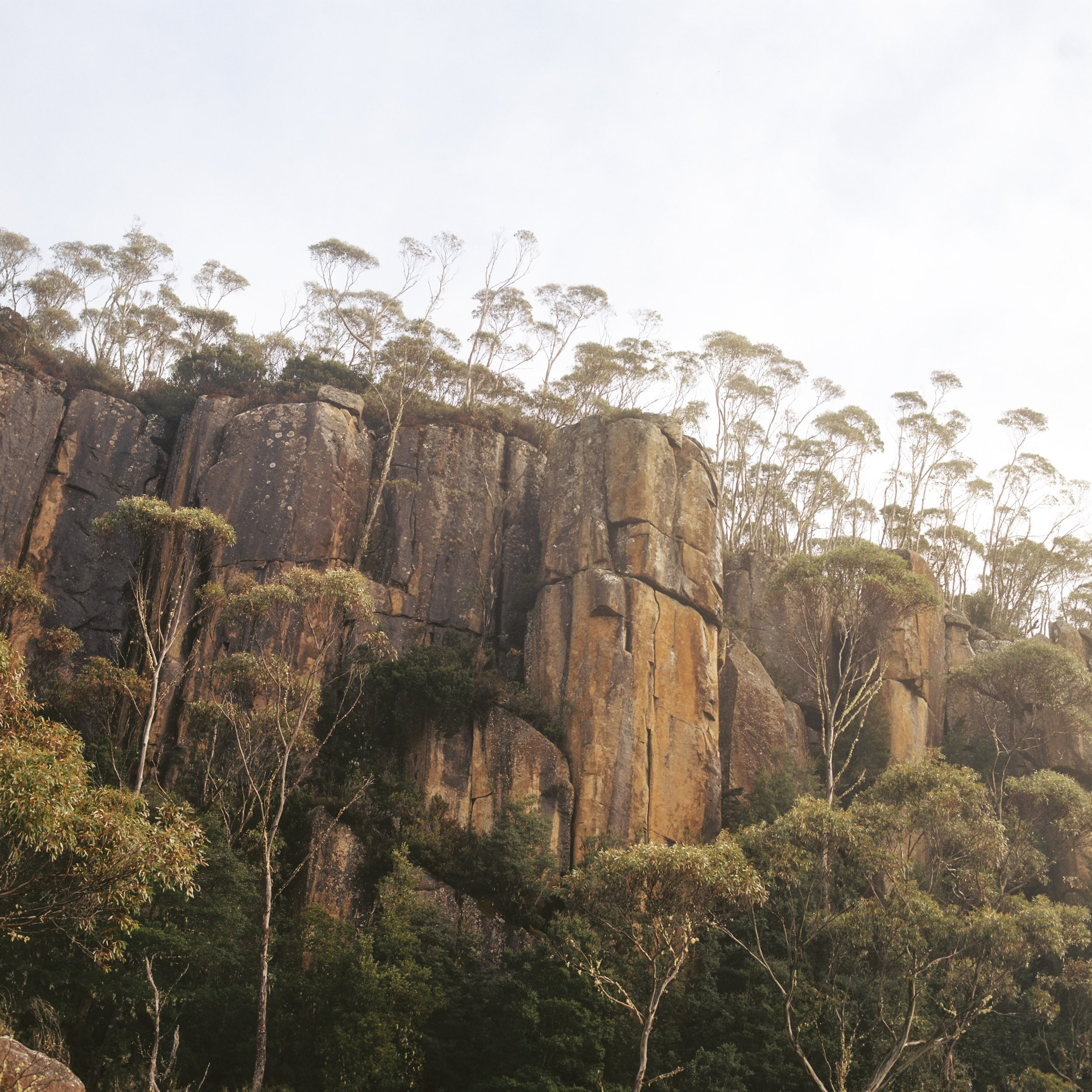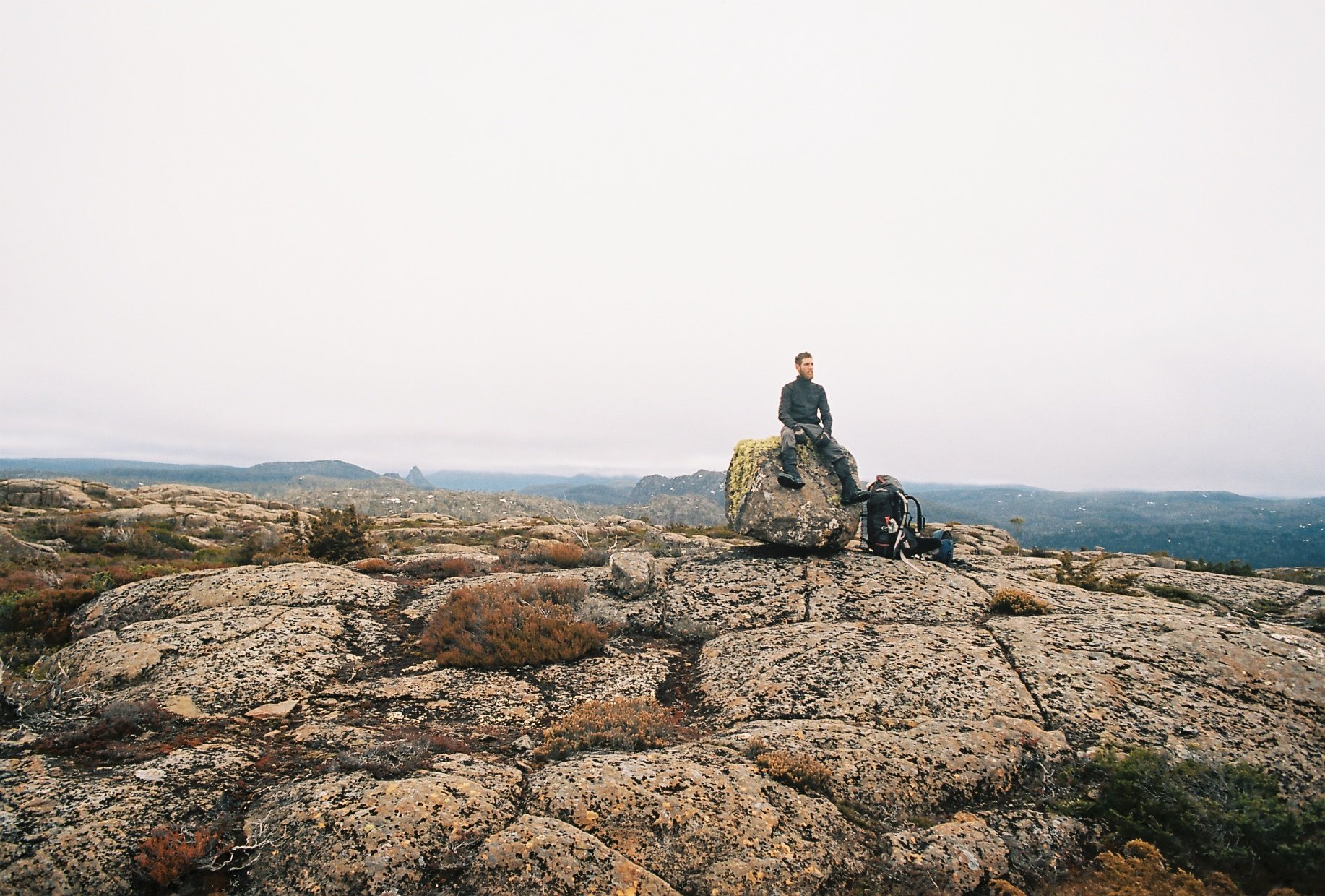
Chapter III: An unexpected encounter

The rocks were bliss,

Scales glistened in the sun

Heavy stomps came from afar

A lesson was certainly learnt.

-A.S. 2014

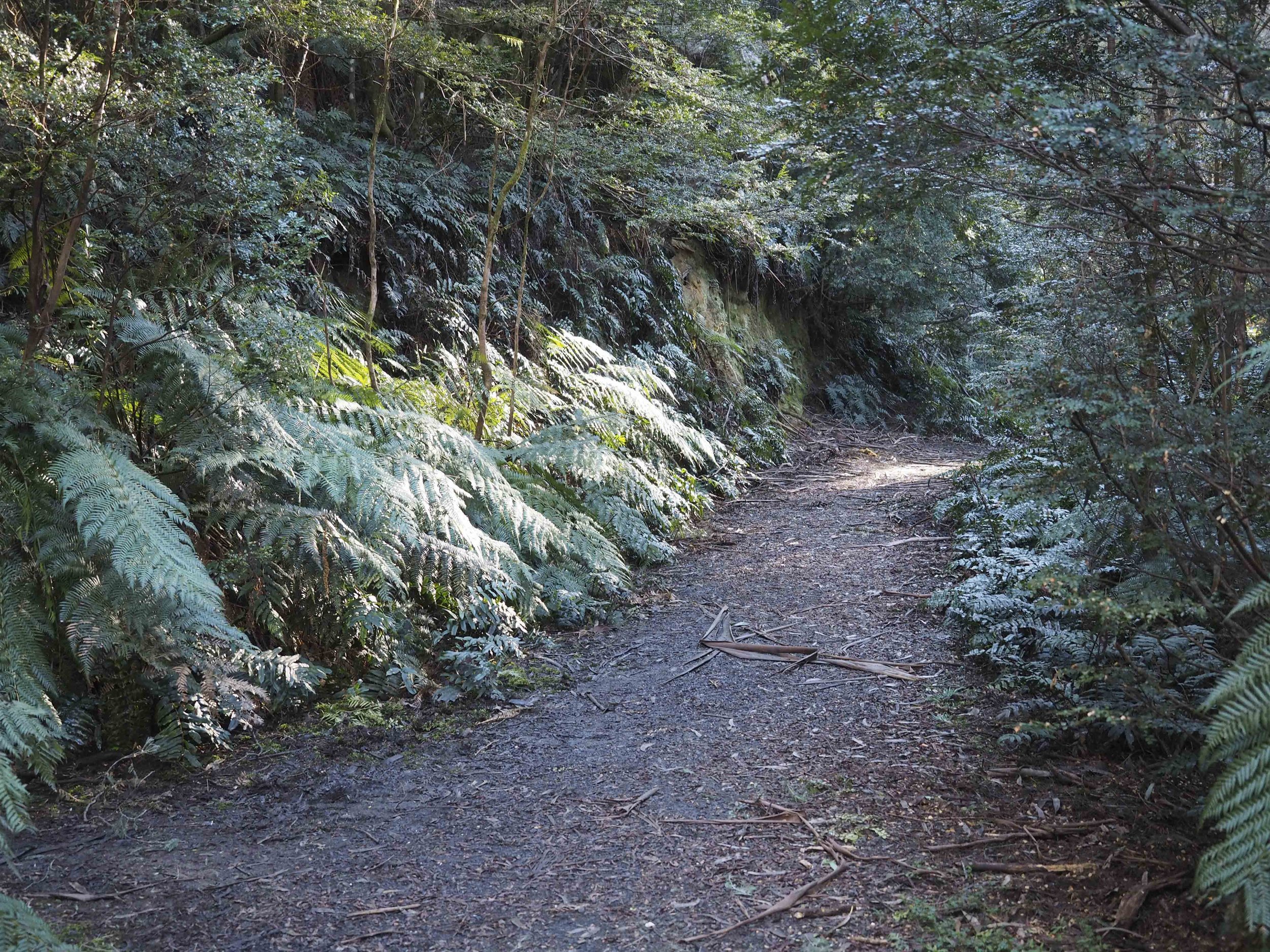
Ferns on the bank of the Thomson River.

“Are ya the bloke who’s going to walk all the way to Canberra?”

The voice had a strong undertone of the nasal Australian tang. It belonged to an overweight lady whose expression was laden with incredulity.

“Yup.” I replied.

“Well you know there’s such a thing as a car!”

Being quite impressed with her own wit, the lady roared a laugh, and before I had a chance to respond again, walked off to her car and drove off.

We were sitting in the shade outside the general store in the relic town of Walhalla; once rich with gold, now rich with day trippers from Melbourne. My friend Joel and I were enjoying a hamburger with the lot, chips and a cold beer. I figured I would make the most of the last commercial kitchen before switching to my dehydrated meals.

It was the 6th of September, and a perfect spring day. I could not have asked for better weather to begin my walk; the air was cool, but the sun was warm enough to allow for T-shirt and shorts.

Being a model friend, Joel agreed to accompany me for the first day of my walk.

My friend, Joel on one of the the first hills of the AAWT.

Our packs were leaning against our wooden table, his being a reasonable overnight bag, mine a monster, made from the heaviest canvas available. It took two of us to simply lift it out of the car. My pack’s contents weren’t just limited to essential gear, but also a number of luxury items that would help me pass spare time; an electronic book reader, camera gear, as well as a solar panel and battery to allow me to recharge all my electronic devices along the track.

When the meal came to an end, we said our goodbyes to the friendly owner of the general store, who waved us off with a smile on her face. She informed me that if I was successful I would receive a certificate on the other end at the National Parks visitor centre. It sounded wonderful.

With much effort, we loaded the pack onto my back, and with a final glance back at the pretty village, we struck out towards the staircase that led up to the official start of the AAWT.
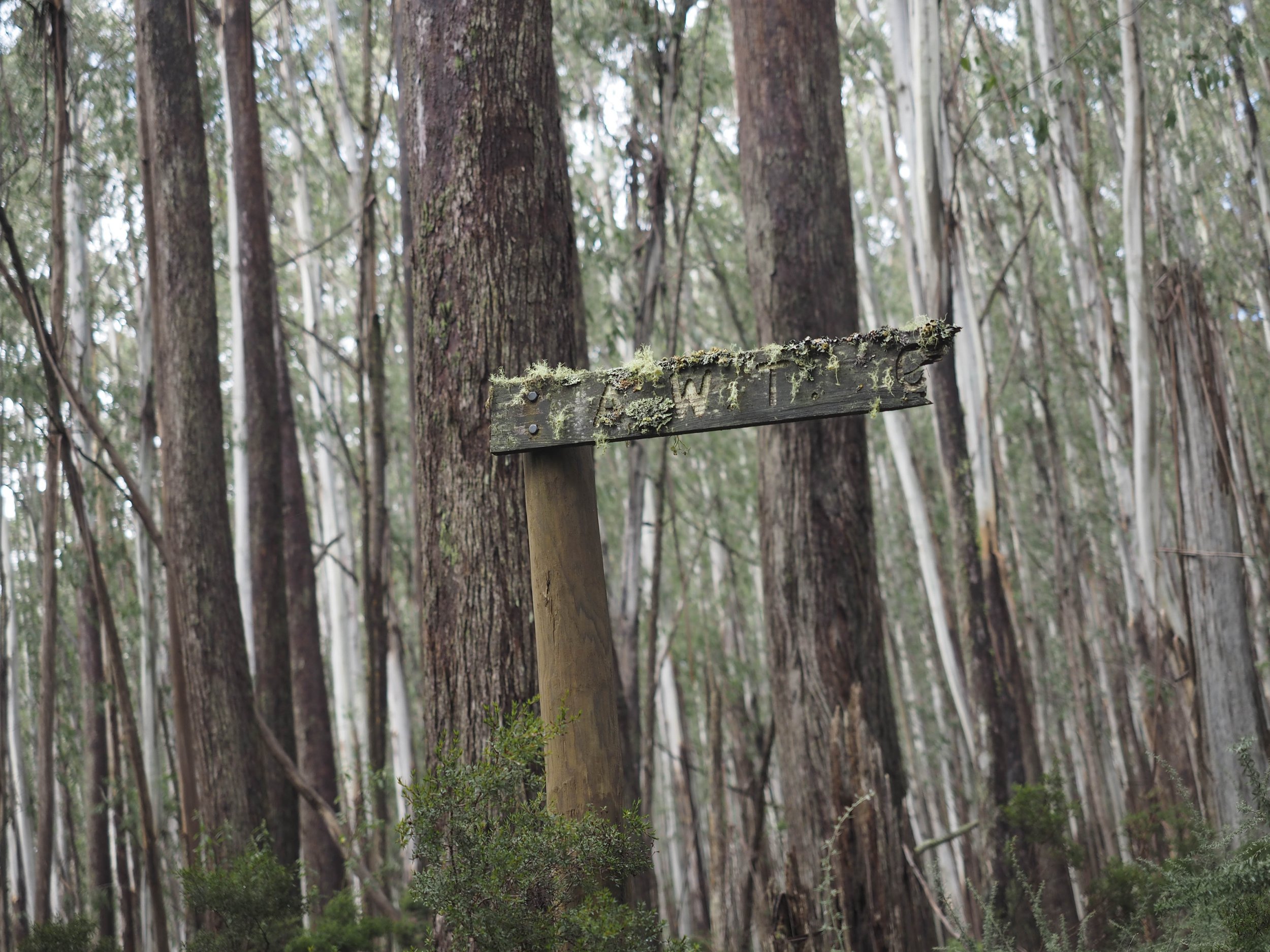
Some of the Australian Alps Walking Track (AAWT) markers are a bit aged.

I will always remember walking up those steps. It was the first time that I’ve ever taken any steps with my fully loaded pack. While I felt jubilant that my adventure has truly begun, I was also concerned. We had barely gone 50 steps before I was out of breath and feeling faint. The weight was crushing me into the ground and I was walking slower than an overweight sloth. Still, there was nothing in my pack that I was willing to take out, so there was nothing for it, but to take another step, and then another, and then another...

As we took to the meandering path, I was reflecting on the words of my brother, who gave me some ‘older-sibling’ advice just the previous day.

“The best thing about your trip is that you cannot prepare for everything that will happen.”

While very poetical, his words did not do much to reassure me. Anticipating all the possibilities was exactly why I’ve spent a year planning my trip! The idea that something could go wrong and there was nothing I could do about it was a nagging thought in the back of my head.

However, I don’t think that even my brother would have expected his words to come true on the first day.

We were walking in a single file on the narrow path that was cut into the hillside. On my left was a steep drop off to the valley of the Thompson River, and on my right was a vertical cliff face, rising high above us. Following the path was effortless, for there was nowhere else to go.

I was leading the way, enjoying the afternoon sun and the scenery. It would be fair to say that I wasn’t paying much attention to where I was putting my feet. My friend Joel was closely behind, and we were walking in a companionable silence. Unseen to me and lying on the path, was a beautiful and rather large snake.

I saw movement before I saw the snake. It must have been basking in the sun, for it wasn’t sluggish at all, as they so often are. Its head was raised, ready to strike. My leg seemed a viable candidate for a target, easily within striking distance.

At this point, instinct took over. In one movement, which was neither graceful, nor measured, I turned around, ready to retreat, and raised my hiking poles as a defensive weapon and yelled, in case Joel hadn’t caught on to the situation,

“Go, go, go!”

The urgency of my tone must have conveyed my message better than the words actually did. By the time my body has turned around, Joel was already sprinting back down the track, as fast as his legs would carry him. I did my best to join him in the hasty retreat, while keeping my eyes fixed on the snake.
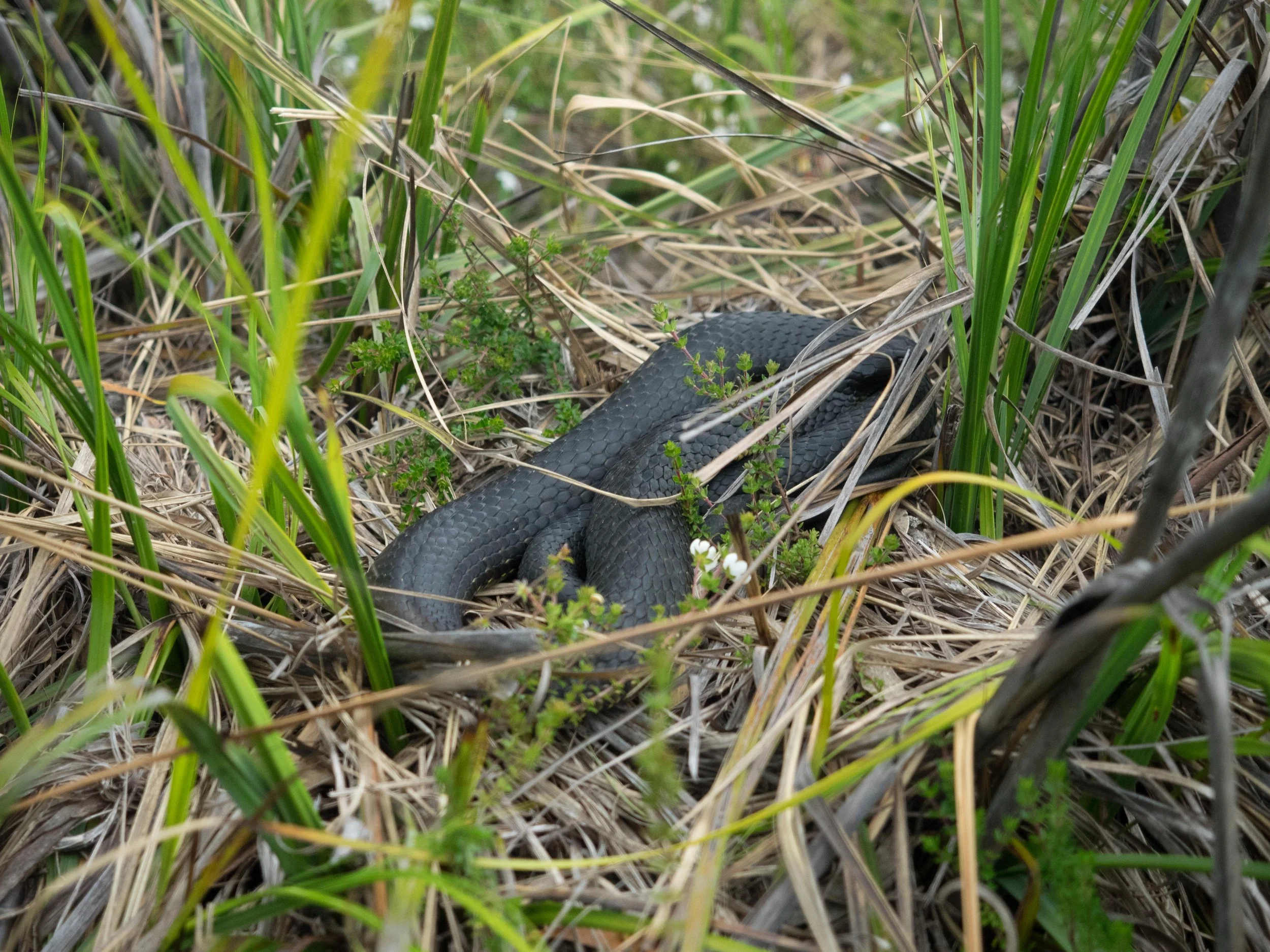
This is a tiger snake I photographed in Tasmania, years after I wrote the Australian Alps story.

What a beautiful snake it was! Its scales glistened in the sun and displayed impressive hues of yellow and green. A healthy specimen, its length must have been over two metres. I just wished it wasn’t quite so angry at me for having disturbed its afternoon nap!

As I was moving away, the snake slid after me, its head raised ever so threateningly. I had my hiking poles raised, just in case it was to strike.

The chase did not last long. The snake, upon deciding that we were neither an imminent threat nor a digestible meal, stopped, then slid off the track and disappeared into the undergrowth.

Afterwards, we laughed, and congratulated each other on the successful evasion of the grumpy snake. We walked on with elevated heart rates.

When we eventually reached our campsite for the night at O’Sheas camping ground, we were both ready to curl up right there on the ground and go to sleep. Instead, we set up our tents, cooked our meal, then iced my shoulders, which were red and throbbing from the weight that’s been sitting on them during the day. My hips were also purple and bruised from the excessive weight loaded onto them from my waist belt. I went to bed trying not to think about putting my pack on the next day.

In the morning, after an elongated breakfast, we said our farewells. I waved to Joel as he started heading back on the track, returning to his life in the city. When he disappeared, I was alone in the wilderness.

The walking boots on the yellow diamond mark the AAWT.

Chapter II: The long and winding road... to the start

What is that sound?

It’s carried by the wind,

I know it,

I hear it, yet

Describe it, I cannot,

Rising, then falling,

It is the question,

The unknown.

The engine of my car was straining against the gradient, as I took one sharp corner after another, my hands sweating slightly against the wheel. I wasn’t scared, just focused. The drop off on my left wasn’t a threat, only a possibility. A possibility I was hoping to avoid.

The bitumen stretched out in front of me like an endless snake as I climbed ever so slowly towards the crest of the next ridge. I patted my dashboard and promised my car a very thorough clean when all this was done. The windows were covered in dust and the rear bumper bar was hanging loose on one side. She may have been an all wheel drive, but these minor dirt roads have certainly taken their toll.

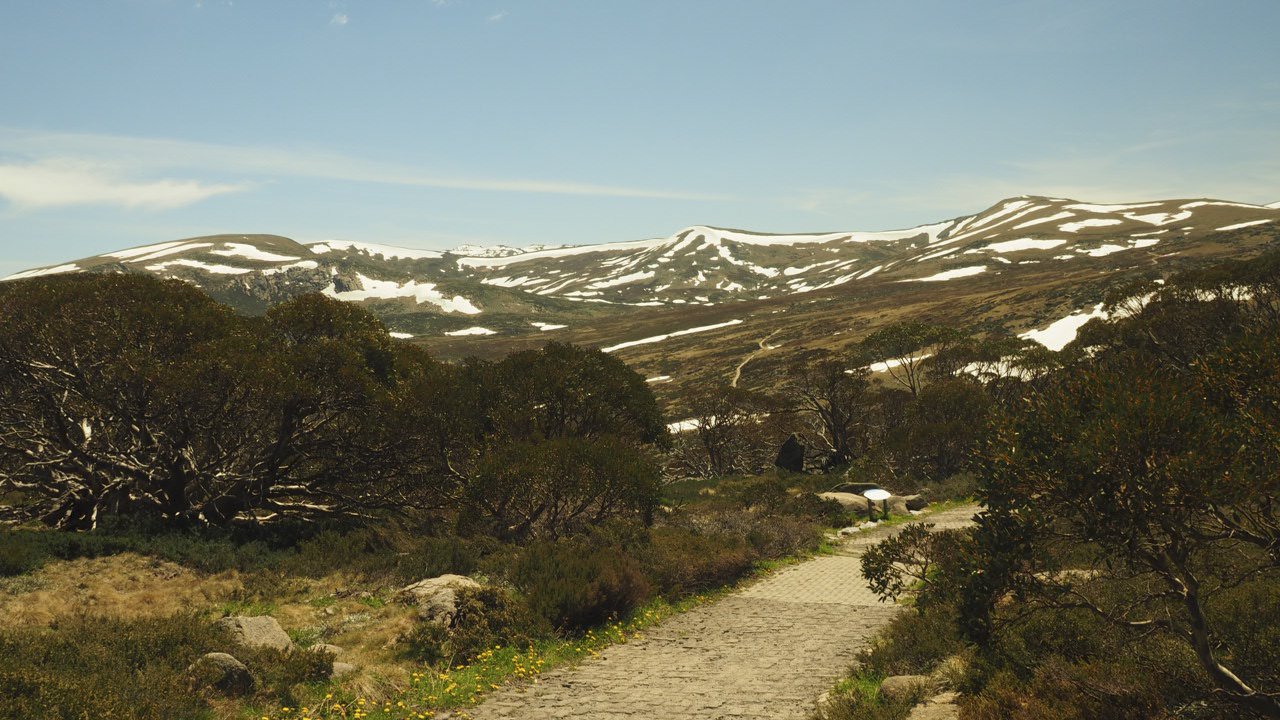
After nearly a week of driving through the Australian Alps, I was beginning to comprehend the enormity of the challenge I have decided to undertake. My aim was to traverse the full length of Australia’s snow country on foot, from just outside Melbourne to Canberra, covering a total distance of over 800km, roughly following the route of the Australian Alps Walking Track (AAWT) along exposed ridgelines, expansive forests and wild river valleys. The remoteness of these mountains required me to be completely self sufficient during my 74 day trek.

The purpose of my week long road trip was to place the necessary provisions along the route, spaced roughly a week’s walk apart. The plastic tubs contained neatly packaged parcels of dehydrated and long life foods that would supply me with not only fuel but also great pleasure during my walk. Along with the essentials, I placed a few luxury items in each drop; cans of beer, tins of plum pudding and blocks of chocolate. The simple things become divine in the mountains.

After eight hours of mountain roads, I was running on autopilot. My eyes were getting lazy as the sun sank low on the horizon. Clutch, brakes, turn wheel, accelerate. Another corner tackled successfully.

I spotted the turnoff to my night’s campsite with relief. Indicate, clutch, brakes, turn.

I rolled in to the campground just past sun down. The Snowy River was dark and flowing fast. I set up my tent on its banks, built a fire and opened a beer with satisfaction. Two more food drops placed was a good day’s work done. I could finally rest.

It was late May 2014 when I finished placing my provisions, just a couple of weeks before seasonal road closures shut off access to the mountains for the winter. My walk was set to commence in September. It was not without some anxiety that I thought about my plastic tubs containing all my food sitting up in the woods throughout the winter. Would they be intact when I reached them on my trek? There was no way for me to know; all I could do was hope that I’ve hidden and sealed the containers adequately to prevent stray hermits and hungry wombats from helping themselves to my supplies.

My winter was spent in preparation.

Possessing a fairly good level of fitness already, my primary concern was accumulating the equipment required to face the rugged wilderness of the Australian Alps in early spring, when the mountains can still be snow bound. Lacking winter experience, I turned to the online bushwalking forums to seek advice. I soon became immersed in the world of technical outdoor gear; four season tents, liquid fuel stoves, and gore-tex.

The gear I was looking for had to be strong, durable, reliable, comfortable and perhaps most importantly, since it was all going on my back, light. One piece at a time, I accumulated everything that was required. I wrote lists, crossed them off, and then wrote new lists, which I crossed off, only to write new lists again... I acquired the most important items, such as my tent, sleeping bag, boots and pack, well in advance in order to test them out and wear them in. However, it wasn’t until the day of my departure that I actually had everything packed into my pack for the first time. It weighed 42 kgs.

Having always been tall and lanky, I did my best to put on some weight in the lead up to my trip. I figured it’ll be handy to have some reserves that I will no doubt burn through during my walk. I gave it my best effort, eating enormous meals of porridge, pizza and pasta and a nightly dessert of ice cream. I continued this training diet with difficulty for a week, being quite different from my usually much healthier routine. In the end, all my efforts were to no avail. After 7 days I have lost 1kg and felt relatively unwell. That was the end of my dieting. After that, I went back to my usual, balanced diet, and soon regained the spring in my step.

I also figured that a bit of strength training will be beneficial before my trip, so I developed a unique training method, which proved much more successful than my dieting. I started doing the weekly grocery shopping for our household with my 100L+ pack. I simply used to stroll over to the supermarket, which was about a 30 minute walk from our house and load up my pack with anything from 20-50kgs of goods, then walk back home. These brief walks with the excessive weight did much to strengthen the correct muscle groups in my frame and I believe greatly helped in preparing my body for the shock that was to come to it when I embarked upon my adventure.

The quiet winter days slowly ticked over. Near the end, the wait became almost unbearable. It seemed that all I could think about was my upcoming walk. There was no nervousness, only anticipation and excitement.

Eventually, the day arrived, and with the help of my friend Joel, who was to accompany me for the first day of my walk, we slid my oversized pack into the boot of his car.

Then, we drove off and left the city behind.

Introducing: The Australian Alps Story

“Although the task may appear overbearing at first, every adventure has a starting point. Tackled by putting one foot in front of the other, even the longest journey becomes a series of manageable steps.”

Now that’s a loaded pack! 2014, Australian Alps. Olympus Em-1.

This is a story that I wrote about eight years ago. Some of you have read it. Most of you haven’t.

It is a story about my first long solo bushwalk, which I undertook in 2014. It' was a 74 day trip where I walked along the spine of the highest section of Australia’s Great Dividing Range, from the relic gold mining town of Walhalla in Victoria, to Tharwa in the Australian Capital Territory, along the Australian Alps Walking Track.

During my journey, I kept a journal, and this formed the backbone of a story I wrote and which I shared on a website titled Mountains of Australia. This website is no longer online, as I pulled it down when I started writing my weekly posts about three years ago. But it is a story that is very central to my development as a storyteller. It is also the longest story I have ever written. So I thought it was time to revisit it.

My trip across the Australian Alps was a formative experience that taught me a lot, not only about Australia’s mountains, but also about myself and my place in the world.

A quote from my journal will do much to introduce the theme of this particular story.

“Away from technology and jacked up pleasures, the illusions of our thoughts are left behind and we begin to marvel at the simple beauty in life. We are struck blind by the rising sun, we are soothed by the breeze on a warm day and we marvel at the landscape that fills us with a deep sense of peace. In nature we find our redemption. The longer our stint in the wilderness, the more our awareness grows and we are able to adopt our true form, as a consciousness that is free and awake to make its own original decisions. Finally free of thought, we are free to start living.”

Bon Voyage my fellow adventurers.

-A.S. 10/02/2023, Lenah Valley

The author, looking about ten years younger than he does now. 2014. Olympus Em-1.

The Australian Alps Story

Chapter I: A Leap of Faith

“That looks like a massive stash of drugs.”

My housemate was looking at the neatly laid out plastic packages. They covered the entire carpet in the lounge room of our sharehouse. It was a big carpet.

“It’s food. 74 days of food” I said.

“That’s a lot of food.”

“I only hope it will be enough” I replied.

It was mid May in 2014 and preparations for my Australian Alps walk were in full swing.

“How long do you have to walk again?” she asked.

“800kms, with side trips” I replied.

“And you can’t buy food along the way?”

“No towns. Only mountains.”

My housemate looked at me confounded and paused before asking her next question.

“You’ve done something like this before, right?” she asked eventually.

“Kind of...” I didn’t want to tell her the truth.

One of the trail markers on the AAWT. 2014. Olympus Em-1.

I remember the day my maps were delivered in the mail. All 27 of them.

I laid them out neatly on the floor, and highlighted the Australian Alps Walking Track (AAWT), then pinned them on my wall. At least I managed to pin half of them, the other half wouldn’t fit. I stared at that highlighted line marking the track as it wound its way across my wall, shrunk down by 50 thousand times compared to real life. It still seemed too long.

“I’m going to have to walk a bloody long way.” I thought to myself then.

As I continued my research, each new revelation added to the number of my friends who were concerned about my mental well being.

“You’re going to do it alone?”

“Aren’t you going to get lonely?”

“What if you get lost?”

I even had a friend message me just before I left, wishing me luck and that she was hoping I’d still be able to hold a conversation when I returned.

That’s when it hit me.

Most people have no idea what it’s like being alone in the mountains for 74 days.

To be away from our comfortable lifestyle that we have grown accustomed to can be truly terrifying. To abandon all that is known for the unknown takes a leap of faith.

Yet, it is only by taking the leap that any rewards in life may be gained.

To be continued…

Snowgum silhouette. 2014. Olympus Em-1.

Welcome to The Melting Billy

Amidst the struggle to come up with decent weekly content, the author decides to change the name of his blog. Once again.

The author, Andy Szollosi, sitting on a boulder. 2019, Pentax MX. Photograph taken by Tim Kirkby.

When I originally conceived the idea for this blog, I called it Mountains of Tasmania. This was in early 2020, and I proceeded to release a new post every Sunday morning. But after about a year, I discovered that a facebook group existed of the same name but had way more followers than my humble readership. So I changed the name to The Boiling Billy in February 2021. But when I discovered that a publisher existed in Australia with the same name, I felt obliged to change the title once again, to the name of my very first blog, which I started in Melbourne in the early 2010s and which never really took off. Scribbleton. A place where scribbles are not only accepted, they are the preferred form of currency. I was resurrecting an old ghost, one which I thought would give me a bit more freedom to explore new ideas.

And what I’ve realised recently is that perhaps the content of my blog since the last name change has lost its direction a little, and has been looking for a way to find itself again. And while I’ve been releasing new photographs with my posts each and every week, I’ve been digging hard to come up with words to go with every post. Scribbleton is a place for scribbles, and it removed the responsibility of writing anything particularly presentable.

Pencil pine on island. 2019 Pentax MX.

Recently, I was having a conversation with a friend, Pauly, whom I visited in Bright on my road trip from Noosa to Hobart. He told me that he really enjoyed the post titled ‘That’s the way the billy boils’, which I wrote about a year ago. It was a piece that talked about the shifting attitudes of bushwalkers in Tasmania, and around the world.

My conversation with Pauly made me want to change the name of the blog back to The Boiling Billy. But I knew I couldn’t. Once a name has been discarded, it can never be reinstated. But I liked the idea of a billy, because to me, it is a uniquely Australian reference to spending time in the bush.

A billy, is a small, lightweight pot that’s usually hung over the fire to heat water in. If we put water in it, and we manage not to spill it, we get boiling water. When the water boils, it is ready to use, to cook, to wash, to do whatever we may please with it. A boiling billy is one that’s achieved its purpose.

BW Panorama. 2020, Pentax MX.

But if we leave the billy over the fire for some time, and all the water boils away, and we still leave it over the fire, well that’s when we get a melting billy. This is the kind of billy we wish to never have. But it is a billy that gets a story told about it. A billy that’s melted is a billy that’s remembered. Well, at least for some time.

So this is a blog about trips out to the bush, to the wilderness, where not everything goes to plan and some kind of learning takes place. Trips that are worth remembering. The slow accumulation of wisdom prepares us better for our next visit to the bush. Next time we go out, we will watch as our water boils and we won’t let our billy run dry.

But a melting billy also represents a vessel in which different ingredients may be melted down and combined. It’s a mixing pot, where various ideas can encounter each other and interact. A melting billy is what we use to make a concoction, a potion, a remedy.

Welcome my dear readers, to The Melting Billy.

Tim Kirkby stands on the edge in the fading light over leawuleena. 2019 Pentax MX.

-A.S. 3/2/2023, Lenah Valley. 

The good traveller

“The good traveller has no fixed plans

and is not intent on arriving.

A good artist lets his intuition guide him wherever it wishes.

A good scientist empties his mind

Dropping the conceptual,

Favouring the actual.

Thus the adept travels the way

Helping all, refusing none,

Attuned to the quivering moment

He apprehends every situation

And acts nakedly in response,

Using inherent possibility

And wasting nothing. “

-Lao Tzu

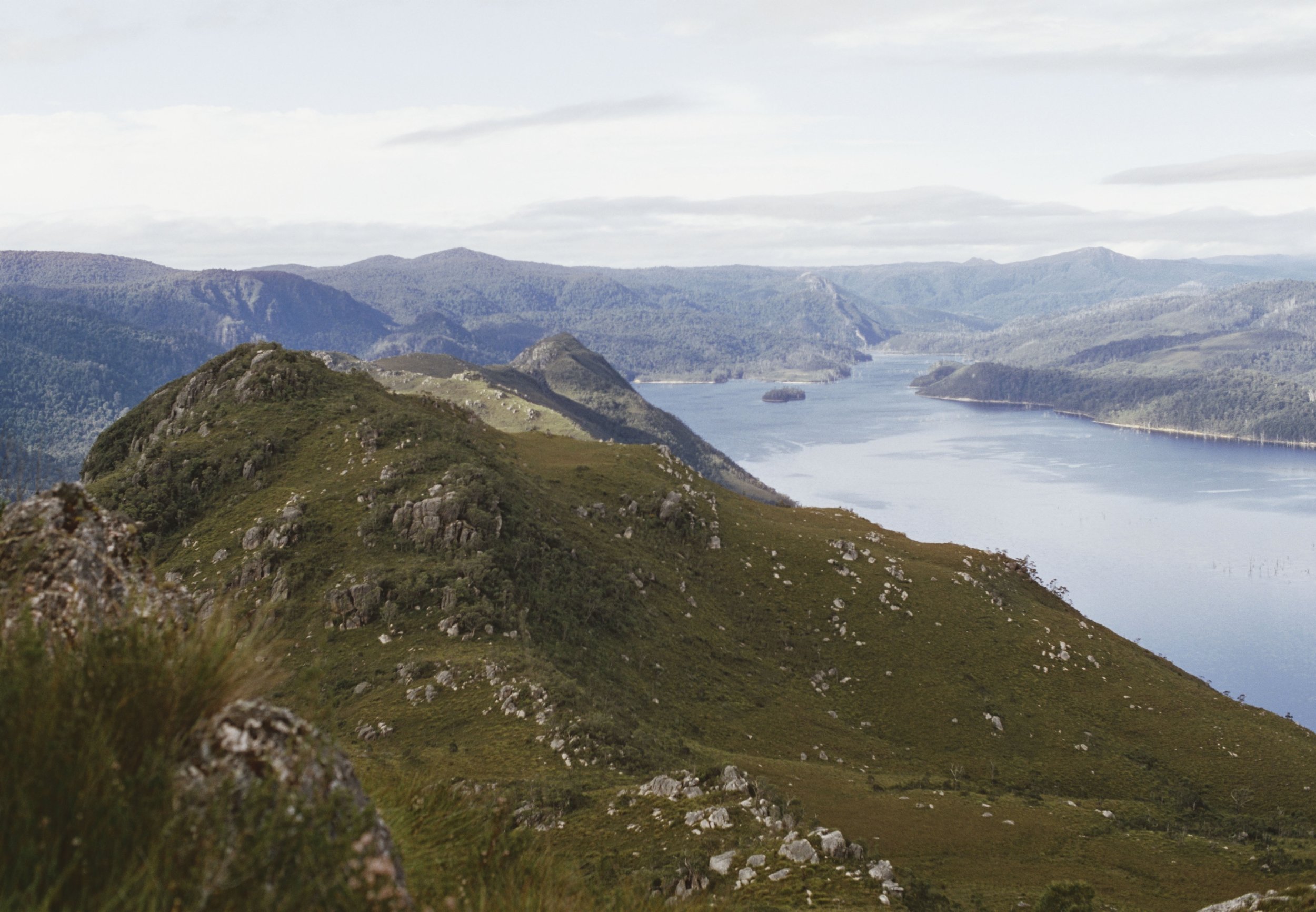
Looking along the spine of Mt Farrell, Lake Mackintosh. Nov 2022 Pentax MX, Cinestill 50.

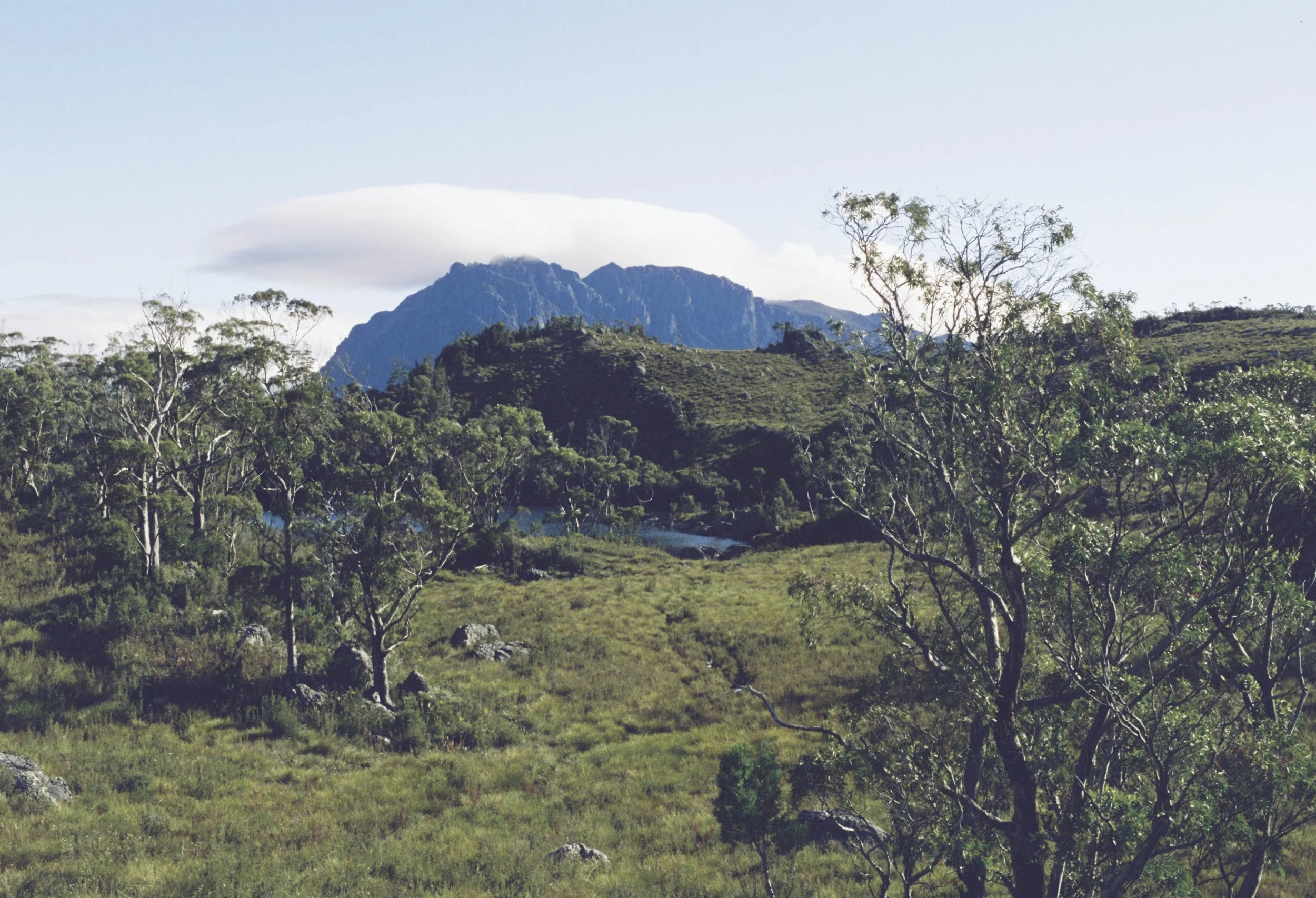
Mt Farrell from Victoria Peak’s shoulder, Lake Mackintosh. November 2022, Pentax MX, Cinestill 50.

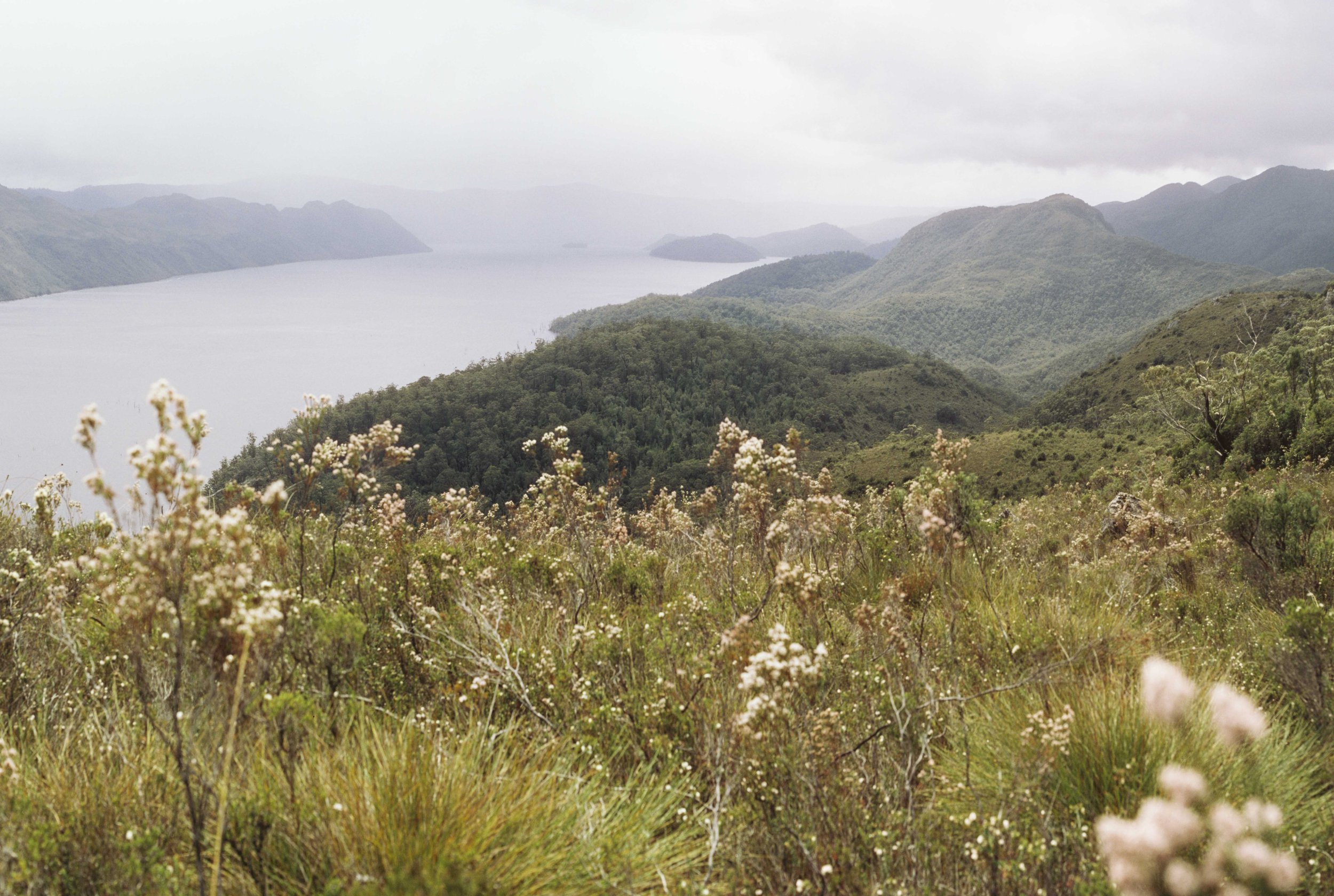
Panorama from the shoulder of Victoria Peak. Nov 2022, Pentax MX, Cinestill 50.

Green Shrubbery

“As I started following the ‘open’ lead, I found myself pushing through tea-trees between 6-12 ft tall. The thicket wasn’t terribly dense and I was able to part the trees with my hands and walk through without too much struggle. I did hit some open buttongrass, and it made me feel like I was right on Hellyer’s heels. Then a 100 m later I was in the wiry bauera, looking for a way out, feeling certain the country has gotten more scrubby since people have stopped burning it regularly. I was able to follow some wombat pads through the worst of the bauera tangle.”- A.S. 16 Nov 2022, near the Sophia River.

Lake Herbert, Mt Murchison beyond. Pentax MX, Nov 2022.

The scrub is always thicker than it looks. Pentax MX, Nov 2022.

‘Open’ Buttongrass Country. Pentax MX, Nov 2022.

Victoria Peak has a distinct trig point on her summit, and formidable scrub on her shoulders. Pentax MX, Nov 2022.

On the way through…

… from here to there.

This highland yabby froze up when it saw me. Playing dead? Pentax MX, Ektar 100, Nov 2022.

The lone pencil pine. Pentax MX, Ektar 100, Nov 2022.

Clearing mist on the ridge. Pentax MX, Ektar 100, Nov 2022.

The mighty range and snow peppermints. Pentax MX, Ektar 100, Nov 2022.

This year will be the year...

…when we let our souls free.

Proud cutting grass. Pentax MX, Ektar 100, Nov 2022.


Scattered snow peppermints. Pentax MX, Nov 2022.


Patches of button grass plains among the tea tree thickets. Pentax MX, Ektar 100, Nov 2022.

-A.S. 2/1/2023, Lenah Valley.

The year that's been...

…in pictures.

The middle finger. Pentax MX, Kodak Pro 100, Jan 2022.

Goon Dog. Pentax MX, Kodak Pro 100, Jan 2022.

Talking ents. Pentax MX, Cinestill 800, Feb 2022.

Waterfall on kunanyi. Pentax MX, Cinestill 800, Feb 2022.

Pencil Pine Bluff and Little Plateau. Pentax MX, Ektar 100, Nov 2022.

Cracroft Valley. Pentax MX, Ektar 100, Feb 2022.

South West Skyline. Pentax MX, Ektar 100, Feb 2022.

Frozen Gateway. Pentax MX, Ektar 100, July 2022.

Sunrise on frozen dolerite cluster. Hasselblad 500C/M, Ektar 100, July 2022.

Alpine herbfield. Hasselblad 500C/M, Ektar 100, Feb 2022.

Morning mist in the Labyrinth. Hasselblad 500C/M, Cinestill 800, May 2022.

Lost World Crags. Hasselblad 500C/M, Ektar 100, August 2022.

Tree Tower. Hasselblad 500C/M, Portra 400, Oct 2022.

A heartfelt thanks to my dear readers of 2022. :) This blog exists for you.

It’s been a big year, and I can sense another big year ahead…

I’m going to continue playing around with double exposures on the Hasselblad and plan to frame a really big print for an exhibition later in the year. I’ll keep you all posted as the plan unfolds. :)

I’m wishing you all a kind, wild and wonderful year ahead!

-A.S. 31.12.22, Lenah Valley.

The point of no return...

Sometimes, there is no going back to where we started.

Pentax MX, Cinestill 50, Nov 2022.

A tipping point signifies a moment in time when an irreversible event takes place. In other words, an event that cannot be undone. We can tip our hat, and we can put it back on our head straight. So this event is not really a true tipping point.

Spilling a jug of milk on the breakfast table is slightly different. We can’t simply ‘unspill’ a jug of milk. We can wipe it off the table, but the spilt milk is not getting back into the jug. At least, not all of it. So this action could be considered a tipping point.

Granite Boulder in rainforest. Pentax MX, Ektar 100. Nov 2022.

A point of no return is a form of irreversible action as well. We pass a point of no return when the idea of turning around exits the realm of possibility. We can encounter a point of no return when we jump; we can’t change our trajectory once we are in the air.

Light circling a black hole can also reach a point of no return, called the event horizon. Once light gets close enough to a black hole, it falls in and never escapes, drawn in by the black hole’s incredible gravitational force. Therefore, no events are going to be visible beyond a black hole’s event horizon. While the light should and must go somewhere when it enters a black hole, all we know is that it goes in but doesn’t come out.

One may wonder, where does all the light end up that gets swallowed by black holes?

This boulder is not going back up the hill. Pentax MX, Ektar 100, Nov 2022.

-A.S. Lenah Valley, 25/12/22.