Pandemic Pandemonium

The time of the Great Exhaustion is upon us.

Pandemonium was the capital of hell in John Milton’s epic poem, Paradise Lost. For a lot of people, trying to walk along the ridgeline of some of Tasmania’s quartzite mountain ranges would be the definition of Pandemonium.

I’ve recently been out on a five day solo bushwalk to the Central Highlands.

What I would really have liked to write about this week was what I experienced out there. But since I haven’t had my negative film developed and scanned yet I figured I might as well write about the pandemonium I found in Hobart upon my return. For the first time since this pandemic was declared two years ago, community transmission of Covid-19 is finally taking place in Tasmania. It looks like even our little safe haven isn’t completely immune. So it’s a little bit difficult to write or think about much else at the moment, since everyone seems to be so caught up in this. Whatever this is.

Grey goshawk, Taroona. 2019, Pentax MX.

The cat is out of the bag. Well and truly. Daily case numbers are surging. The media is sure to report exactly how many deaths have occurred, the statistics are here to terrify us, to keep us in control, to make sure we are being ‘safe’.

Our plans are becoming unraveled, there is uncertainty in the air and we are being driven further and further from our fellow humans as the necessity for social distancing sinks in. We can disregard the public health advice and increase the chance of transmitting a potentially deadly pathogen to others and through this become social outcasts. Or we can tow the line, become vaccinated, socially distance and follow the path towards hermitude and alienation. Damned if we do, damned if we don’t.

Kunanyi at sunrise. 2019, Pentax MX.

It’s worth considering that by trying to do everything as normal through this pandemic we have increased our day to day tasks that need doing. We are still trying to live our life as we have before the pandemic began, but with the added measures of trying to suppress the spread of this virus. This is making us strung out, anxious and less able to cope with what life has to throw at us.

By having to deal with the pandemic, we have reduced our capacity to deal with other things, yet those things will not wait for us. The climate emergency is still happening. The great extinction of our time is hammering forward relentlessly, driven by our largest industries, with the full endorsement of most governments. Perhaps this virus is the great distractor, here to alter the trajectory of our thoughts, away from the problems that we really need to be dealing with.

The 1930s brought the Great Depression. I foresee the 2020s bringing us the Great Exhaustion. The next few years are lining up to exhaust our mental, physical and emotional faculties as well as the Earth’s limited resources. As we try to keep business running as usual, to keep a system alive that is clearly broken, it’s going to get tougher and tougher for us. Food supplies are going to become scarce, at least in certain parts of the globe. Mass migrations are inevitable, as people seek to exit uninhabitable areas of the Earth, which are increasing in size. Walls are being built, to keep privilege restrained to those who already possess it. But the writing has been on the wall for some time. Just because we keep ignoring that it’s there, it doesn’t make it go away. Things are only going to get harder from here.

Eucalypt forest, 2019. Pentax MX.

But let’s return to this pandemic. We are in the midst of it now, and it appears that we have to deal with this, before we can generate capacity to deal with anything else. At least, this appears to be the case in Australia at this point in time. We don’t really want to deal with Covid, I don’t think any of us do. But we aren’t really given a choice in this. It’s become quite easy in a way. Once shit’s hit the fan, there is only one thing we can do. We need to clean up the mess.

There is no use wishing we were elsewhere, doing other things than what we are finding we have to do. Just like we must ‘gracefully surrender the things of youth’ as we age, we must give up our sense of normality, the status quo, our belief in how we think things should play out. Our best strategy is to take things day by day, and respond to our environment and each other in a way that is authentic and sensible, as demanded by the situation. We need to be present, not afraid. We need to build trust, not suspicion. We need to dig ourselves out of this hole we seem to have fallen into. Together. Somehow.

How? I don’t have a fucking clue. But I don’t think anybody else does either. So at least we are in this together.

Cape Portland, Flinders Island beyond. 2020, Pentax MX.

What I can do, I will do. And that is, I will ensure that I eat well, sleep well and do what I can to stay healthy and therefore reduce community transmission of what is clearly a dangerous pathogen to other human beings. This doesn’t mean that I won’t catch covid one day. I probably will. We probably all will. The virus will continue to evolve, until it’s so contagious it will be impossible not to catch it, but its effect by then will likely be barely worse than the common flu. The flu was a lot more deadly when it first appeared than it is now.

It’s interesting to reflect that the Spanish flu when it first appeared was during the First World War. A time when humanity was obviously going through a dark time. Surely it’s not a coincidence that Covid has arisen now, at this point in history. So we must reflect, why now? What is happening on Earth now that has made humans as susceptible to illness as we were during one of the darkest periods of our history? Why our respiratory system? Why is this the organ that’s being attacked? What is this virus trying to tell us? What can we gain from this interaction, what is there to learn?

So far what this virus has told us is this: stop moving around. The further we travel, the more it spreads. I don’t think anything in human history has been as effective at reducing global greenhouse emissions as this virus. Decades of conferences between ‘world leaders’, and CO2 emissions have not reduced, in fact the concentration of CO2 in our atmosphere has steadily increased. It’s a funny coincidence that the measures required to contain the spread of the virus also happen to be what’s required to curb greenhouse emissions. If we are to address the rising of global temperatures, we must reduce our reliance on motorised transport driven by fossil fuels. And I’m not convinced electric cars are the answer. Electric vehicles still need batteries. Batteries still need raw materials dug out of the earth, which require vast industries based on the extraction of raw materials; they still require churning the earth into consumable products.

Perhaps this virus is really just trying to help us realise what it is we really need to do. Yet we don’t appear ready to do it. Not quite yet. Because we are still trying to maintain the status quo. Business as usual. ‘If we just get through this next bit, life will return to normal. Back to how things were.’ Even though deep down we all know our system is clearly broken and must change if we are to survive. We are due for a major paradigm shift in how we live our lives. This is going to happen whether we want it or not. Just like how the pandemic has happened. It won’t be of our choosing, but we will have to deal with it nevertheless.

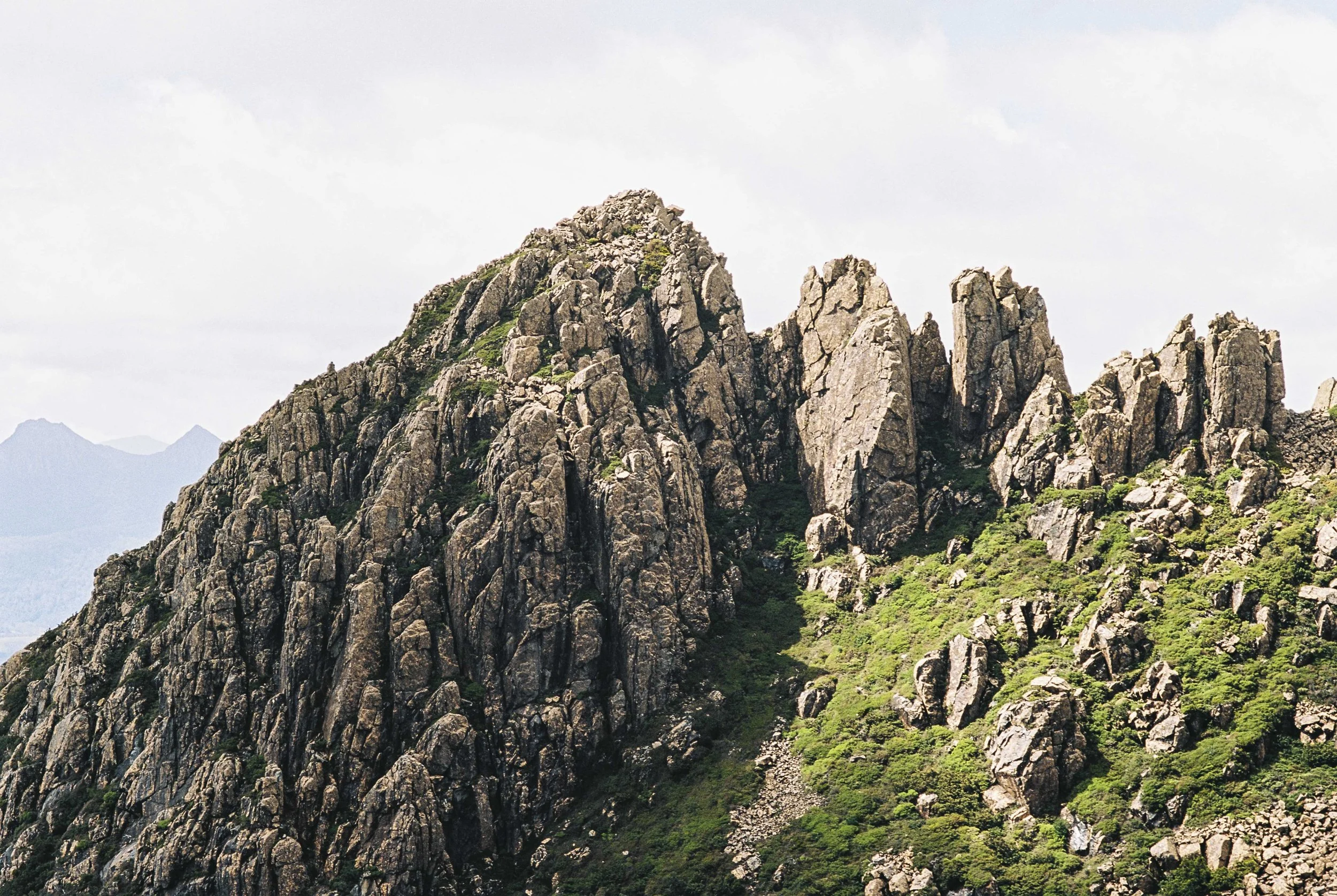
Quartzite, 2020. Pentax MX.

Joanna Macy calls our current time the ‘Great Unraveling’, and the time ahead, the ‘Great Turning’. I believe the current pandemic is a sure sign of the beginning of the ‘Great Unraveling’. And the Great Exhaustion is going to be part of this. It’s happening already. First we must reach a new low point, a point which seems unimaginable to us even now. Things will continue to get gradually worse and worse. Resources will get scarcer and scarcer. We will reach the bottom of a bottomless pit. And once we’re there, we will have only one way to go, and that is up.

Our redemption won’t come from a magical invention. Science won’t save us. Technology won’t save us. The only thing that will save us is a change in our attitude on how we relate to our environment and each other. When we are at rock bottom, we will be ready to commence the next chapter in the Earth’s history, ‘The Great Turning’ where we will leave many things behind, which we currently deem as ‘essential’.

I don’t think we are ready to face ‘The Great Turning’ yet. I don’t think we have reached the bottom of the pit. Things are going to get a lot worse before they get better. This gives me heart and it gives me strength, like a great storm brewing on the horizon fills me with energy and excitement. Our world is changing fast. And it’s going to continue changing faster than we can now imagine. I don’t know what world we are going to live in 5, 10 or 50 years from now. But I take solace in the unknown. I accept the unknown and use it as my blank canvas.

For what point is there in a life whose outcome is predetermined?

Our dreams shape our stories, and the stories we tell shape our reality.

Twenty Twenty Two

That’s a lot of twos!

The white tint on the frenchman’s cap. 2020, Pentax MX, 50mm.

On the nuances of time

Why is time always running away from us?

We never seem to have enough of it,

it keeps running away, running out

and the more we rush

the quicker the grains

fall through the hour glass.

Why do we always hustle?

Always busy,

Getting ready for the next thing

Failing to attain the presence

We wish was given to us.

Fleeing away, fleeing far

Time never stops for us

Not even for one bar.

August, 2020. A.S.

Looking South West. Pentax MX, 2020.

Busy bees

All these words

and all these thoughts

All these swords

And all these bows.

Busy little bees

Making honey,

One bear comes along

Eats it all.

Thoughts, words, actions

In escalating order

of significance.

Some people deny,

Spend their lives distracted;

The mounting evidence,

Turbulent need to act

Drowned in the metaphorical bottle.

13.8.2021, A.S.

‘Lake Whisper’. Pentax MX, 50mm.

Smitten snippet

Aligning watches

Ticking as one in time

Your hair, my hands,

folding origami

as mimes.

2012, A.S.

Morning Mist. 2019, Pentax MX, 50mm.

Why does the quiet matter so?

The lone breeze on the hill

The rippling tarn on the plateau,

The banksias, the buttongrass stand still

and the fog dampens every sound.

This quiet, voiceless place matters

It may not move, but it is not dead

It may not cry but it could be sad.

The quiet matters, because some things

are difficult to hear, they are not loud

The beating of a heart, the flutter of little wings

Reflective thoughts, troublesome mice.

Quiet is the sunrise as it brings colour,

Allows any voice to be heard over it.

If we can sit, and hear the dew drop

From the flower onto a shelf of rock

We will know,

Why the quiet matters so.

-A.S. 3/12/21

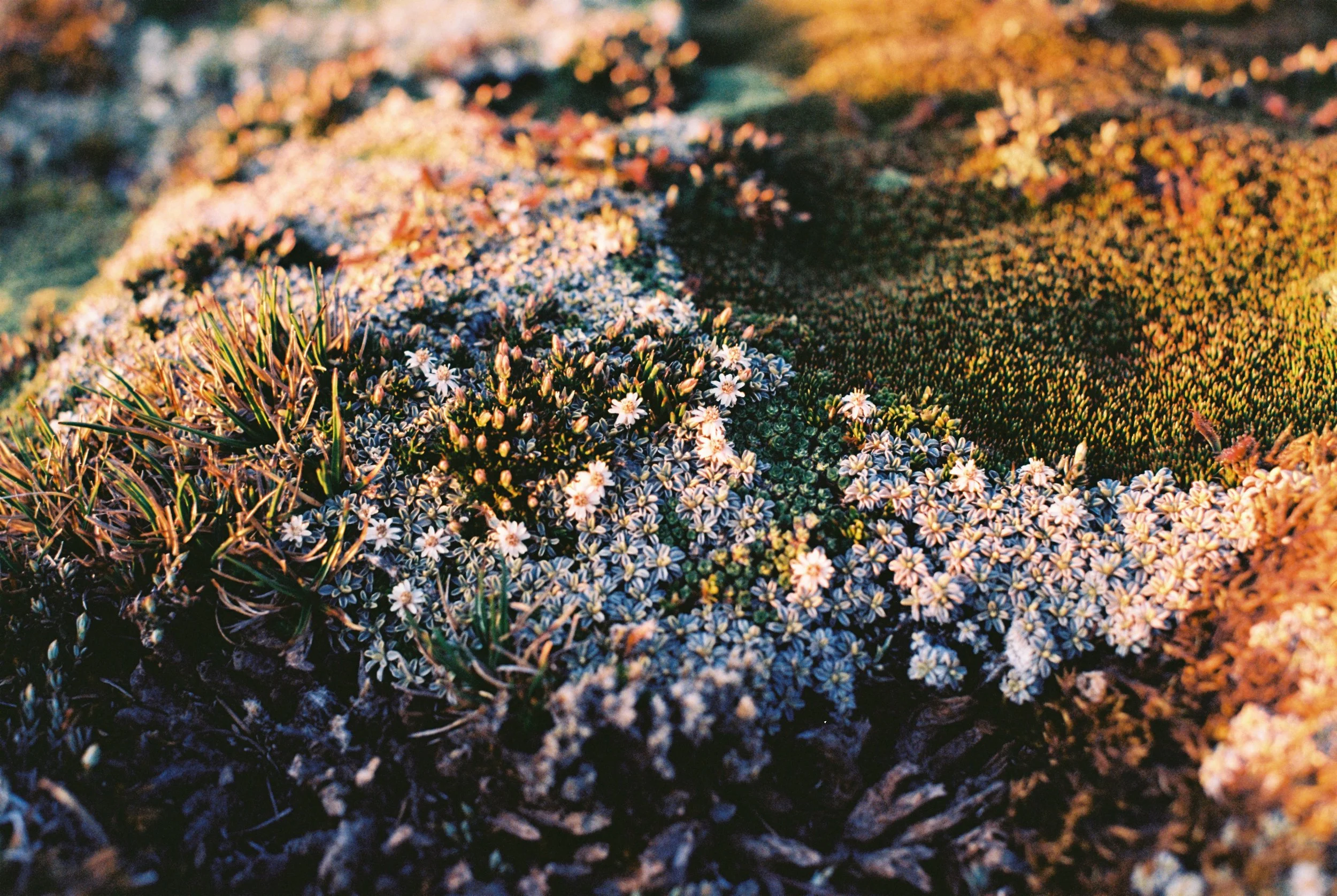
Cushion plant colony. 2020, Pentax MX, 50mm, Ektar 100.

Goodbye 2021

This year, like other years before it, has been quite unlike any year before it.

Devil’s Gulch, kunanyi. 2021, Pentax MX, Portra 800.

With each revolution we take around the sun on this home planet of ours, certain events take place which are unprecedented, unique and irreversible.

It’s fascinating how something as small as a virus, which seemed to appear out of nowhere, has taken control of our lives so entirely. We are living through a time of a mass extinction, catastrophic climate change, impending societal collapse and the thing that brings our world to a halt is a little ball with sticky tentacles.

I guess it makes sense. Being able to extract oxygen out of the air is our number one priority as a breathing, sentient organism. Covid has hit us where it hurts us most. It affects our ability to breathe and so it has had a severe effect on our way of life. In a way Covid has taught us something really important. It appears that we really value our ability to breathe.

The trouble is, for as long as we continue to view ourselves as separate from the natural world which we are destroying, we will not find a lasting solution to our inability to breathe properly. Our own health is intricately tied up to the state of our planet’s health.

Ring of light. 2021, Pentax MX, 50mm, Kodak Pro 100.

I feel that that coronavirus is the physical manifestation of a sense of hopelessness at being unable to stop the governing forces from destroying so much we value. We have created a power structure that is wiping out life on earth at an accelerating rate. It’s disguised as progress, as a march toward prosperity, for the sake of country, god, wealth, economy. The sacrifices by the side of the road have been tradition, culture, language and diversity. To mourn these losses equates to being labelled in our society as depressed, as ill, as a pathological anomaly. Yet, when we acknowledge our sorrow at the state of the world, and the direction where it’s going, we are only being truthful, human.

Cape Portland, 2021. Pentax MX, 50mm, Portra 160.

The thing is, we can turn the tide. If we can manufacture and consume two billion face masks a day, we can also dream of clean air and drinking water. We can also imagine a world where the values driving our society aren’t towards wealth, but towards health, not just for humanity, but for all living systems that support our existence.

Timmy K swimming the channel. 2021, Pentax MX, 50mm.

Apathy is a slow form of suicide. Turning away, ignoring is as good as being complicit. If things are to change, we need to change them. We can’t continue to ignore the fundamental issues that are causing our illness and expect we will somehow get better simply through being injected with vaccines or by swallowing pills. Becoming healthy can’t be achieved through fighting illness, just like peace can’t be achieved by fighting terrorists. To be healthy, we need to embrace healthy habits. Eat well, sleep well, live well. Foster community and collective cooperation. Acknowledge the interconnectedness of life. We already know what it is we need to do. We just need to do it.

Jingle and Pringle, stray kittens we found by the side of the road. 2021, Pentax MX. Portra 160.

If there is one thing I lament about the year that’s been is that it seems to have driven people further apart from each other. The measures brought in to control the pandemic have been successful at more than containing the spread of the virus. It has also brought alienation, suspicion and fear into the mainstream. We can’t embrace each other without uncertainty, we can’t shake hands without fearing judgement, we can no longer see our loved ones without a worry of making them sick. This kind of mindset is debilitating.

Rainbow Valley. 2021, Pentax MX, 50mm, Portra 160.

The media has created yet again a landscape that depicts the world as a battlefield, where there is clearly good and bad, safe and unsafe. Those who get the vaccine are doing their civic duty and are ‘safe’, whereas those who don’t are a risk to the rest of us and are labelled ‘unsafe’. This is the story we are told, in a forceful way. Soon, those who are not vaccinated won’t be able to travel, shop, live as fully participating members of society. To continue existing in this pandemic, we must make a choice. Either embrace the common concept of what it means to stay healthy, and get the jab, over and over again, or become socially exiled.

“I am the Lorax and I speak for the trees, for the trees have no tongues, and I’m begging you sir, at the top of my lungs, what on Earth have you done to my myrtle beech trees?”

Our obsession with safety is going to be our downfall. We can’t make this world safe, no matter how much we’d like it to be so. People will continue to die, despite our best efforts. We can use the best technology available to us, but if we create a socially divisive cultural landscape, new and deadly forms of illnesses will continue to arise. We can’t contain the spread of a virus any more than we can contain the spread of greed and obsession with power. Perhaps we can, to a point, but then it will break free and spread. And this is exactly what we are seeing.

Burnt pencil pines, Central Plateau. 2021, Pentax MX, 50mm, Ektar 100.

The outbreak we are seeing in Australia is perhaps less severe than it would have been if it happened before the majority of people became vaccinated… but what has been the cost? What has been the cultural and societal costs of the measures that have been brought into effect? We clearly don’t know, cannot know. But time will tell, as it always does.

Fog on the lake. 2021, Pentax MX, 50mm, Portra 800.

It’s easy to look back on 2021 and label it as a new ‘worst year ever’. If you do, I dare say you probably haven’t experienced war, or survived a famine, or had the bubonic plague. Neither have I, and I am grateful for that. All I’m saying is that humanity has endured some pretty dark times in the past, and that dealing with Covid probably hasn’t been the worst of it.

Fishing boat near Bicheno. 2021, Pentax MX, 50mm, Portra 800.

I’d like to take a look back on 2021 not in terms of all the things I didn’t get to do, but in terms of the things that I did get to do. It’s easy to lament the state of the world, to feel wronged, to feel injustice at having our plans foiled. But if we can’t feel gratitude for the world exactly as it is, we will never find happiness, no matter where we seek it.

Symmetry, my photographic theme for the year 2021. Pentax MX, 50mm, Kodak Pro 100. BW edit.

Waratah Special Edition

Here comes the silly season!

Nature’s Christmas decoration: the flowering of the waratahs signals the oncoming festive season. 2021, Pentax MX.

Christmas can mean so many different things to people. To children, it’s the time of treats and sweets, for grown ups it can be anything from the loneliest time of year to the loveliest time of year. Christmas can translate to love or it can translate to consumerism; it depends on the perspective lens we wear.

There is a strangely powerful anticipation in the lead up to Christmas, which begins in earnest when we enter the final month of the year. The Christmas decorations go up at home and around town and in the shops. The gift hoarding begins. Chocolate santas wrapped in aluminium foil line the supermarket shelves, fruit mince pies appear at the bakers, and every bloody retail assistant starts wearing red hats with white pom poms on the end. The Christmas carols start playing, and don’t stop playing, songs depicting little baby Jesus and his nativity scene.

If I was an alien observing humanity from space I would think there is something very strange going on indeed!

I’m not sure why it is that people go a bit bonkers in the lead up to Christmas. I have worked in retail for ten years, and there is a strange process that occurs the closer we get to the holidays. It’s as if everyone realises simultaneously on the 1st of December that there is only one month left of the year and that it’s time to pack in all the things we intended to do from the very start of the year but never quite got around to doing. Plus there is an imminent work deadline, plus the kids are home from school, plus we need to think of a gift to buy for our least favourite work colleague, and dear lord we haven’t ordered the turkey from the butcher, and what on earth will grandma think if we break tradition this year…

Stop. Right there. Take a breath. It will be okay. You don’t have to shop till you drop. You don’t even have to shop. If you wish to let someone know that you love them, there are more ways to do that then buying an expensive gift that you can’t really afford. Instead of running around like headless chooks, how about we all calmed the hell down and lowered our expectations of ourselves and simply made sure we are present and attentive to the people we care about?

I would like to conclude on a sobering note.

I heard that Lifeline gets the most phone calls around Christmas time. Not everyone has a family to turn to, come this time of year. So if you feel overwhelmed at all your social obligations, and feel annoyed that during the Christmas lunch you might be seated next to your least favourite auntie who tends to smell too strongly of lavender, perhaps think for a moment of the people who won’t be having a Christmas lunch at all. People who live alone. People who have no one to call on. People on the streets, people who have been outcast by our culture, people who for one reason or another have been forsaken. For some people, Christmas is a really difficult time of year.

PS: Thank you to every one of you who read my posts or enjoy viewing my pictures. You inspire me each week to come up with new content, to go out and take photos, and makes me feel like perhaps all of this pointless writing and photography really is worthwhile.

May this festive season bring you all love, joy and kindness and a chance to reconnect not just with your friends and family, but a chance to reconnect with our collective home, planet Earth.

Much Love,

-A.S. 18/12/2021

Practice what you preach

I was recently told that I’m a hypocrite. That my actions don't match my words. This statement stung a bit, then I remembered that not many hypocrites realise they are acting as such, until it’s pointed out to them.

Self reflection can be difficult. 2019, Pentax MX.

The problem was, this statement came from a person whom I care about and whose opinion and values I respect. If it came from someone I didn’t really know, I could simply ignore it. Even as it is, the easiest thing would be to deny the claim and keep on living as I have. But for some reason I feel that I need to take the difficult way, the way of truth.

I talk about the importance of patience, but my actions reflect a lack of patience. I say I admire the beauty in simply letting things unfold naturally, yet I can’t help but wish to impose my will on certain situations, in order to achieve a desired outcome. I make a show about upholding certain ideals, but the reality is that my actions fall short of them a lot of the time.

Dark and light. 2019, Pentax MX.

Humanity’s behaviour is riddled with double standards. We are walking paradoxes on two legs. We often contradict ourselves, and never even realise it.

I don’t wish to defend myself against the claims that I am a hypocrite; that would be an attempt at discrediting the original claim. I must accept this person’s view as their version of reality, and live with the fact that in their eyes, I am indeed a hypocrite. A walking contradiction. Perhaps not all the time, but at least some of the time. Despite the difficulty of hearing this claim, I can’t help but continue to view the person who called me a hypocrite as a friend.

A friend isn’t simply someone we spend our spare time with or have fun with; a friend is someone who holds us accountable, a friend is someone who challenges us, someone who points out to us when we are in the wrong. And a friend is someone who listens, no matter how difficult the things are that are being said.

When the way forward is difficult. 2019, Pentax MX.

Mountains are friends. Mountains have a way of teaching us about ourselves in ways we least expect. We strike out on trips with what we think is strong determination. But when the storm blows in, and our tent rattles in the night, we get scared and wish we were somewhere else. We might think ourselves fit, until we start to climb a mountain, and we realise how heavy our bones really are. We have these grand visions of conquering and success, but when our toes are numb with cold, and we have eaten all of our snacks, and we are lost in the scrub, we realise how small we are, how pathetic, how weak, how completely irrelevant. It feels terrible to face our own shortcomings, our mortality.

Fuzzy bones. 2019, Pentax MX.

As a culture, we deny the most obvious, we deny death, we deny our love for the world that we are destroying and we deny our humanity when we oppress, when we subjugate others to our will. We deny the truth when we trick ourselves into thinking our actions are less harmful than they actually are. We refuse to accept a version of the world where we are capable of evil, of harm, of hurt, and actions that destroy rather than create. Latent in us, there lies a mixture of powers, and we don’t really know how or when they might arise, until circumstance drags it out of us.

Toward discovery. 2019, Pentax MX.

It is difficult to face the truth. But I wish to face it nevertheless. Or at least, so I like to believe. The reality of the matter lies in the evolution of this great unfolding that began with a big bang so many years ago…

Memo to self...

Lest I forget…

Remain present.

Be patient.

Relinquish attachments.

Nurture hope, discard expectations.

Love the world you live in.

Seek balance, beauty, love, understanding, art, novelty and adventure.

Maintain healthy relationships with all people in your life.

Expand your awareness.

Eat well.

Sleep well.

Do not procrastinate.

If you procrastinate, make sure it’s worthwhile.

Laugh.

Be grateful.

Take joy in the little things that happen in your everyday life.

Remember, love is the essence of redemption.

Embrace the great mystery.

Just before dawn.

Dawn Dawdles

The birds wake me

I close my eyes

Here comes the never-ending dream.

A.S. 2017

O’Possum

It’s a windy day

The tree stands and swings wildly

Possum sleeps mildly.

A.S. 2017

Together or Apart?

Morning brought the question,

Delivered with sweet sunlight.

“Blow!” The wind replied.

A.S. 2017

For Banjo Patterson…

Rain, she drops,

tip,-tap-toes,

here she comes knocking

on my kitchen door.

Out the back door I went,

to find a forest.

It was burnt and black,

but hope was still alive.

There is a cure

Without the lie.

In the green of the leaves

our only future lies.

Come breathe the air

here in the mountains,

in the wilds,

and in the rapid

of the river’s dark.

A.S. 2017

When it's too quiet…

On the future of Lake Pedder.

Calm day over the Pedder impoundment. Oct 2021, Pentax MX, Portra 400.

There is something very strange about a place that is too quiet. It implies stillness, the absence of movement. And when things remain still for too long, they stagnate. Movement brings life, in particular, the movement of water is the crucial requirement for life. Water wants to flow, toward the sea, then evaporate, fall as rain, and begin its journey again, down from the mountains, toward the endless sea.

We may find a place beautiful, but that doesn’t mean that it contains a healthy and functioning eco-system that supports a diversity of life. There is a stark beauty to a frozen glacier, or desert, where life hangs on by the skin of its teeth. Similarly, we may find an artificially created lake beautiful, and appreciate the recreational opportunities it provides, but if we listen carefully, we will discover that there is something fundamentally wrong when we alter a landscape so dramatically.

The South-West mountains tend to be made of quartzite, which is sharp and pointy. It is the slow process of erosion of these quartzite rocks that has created the incredible beach of the natural Lake Pedder. Oct 2021, Pentax MX, Portra 400.

I recently made a trip out to what we call Lake Pedder, which is an impoundment 25 times the size of the Lake Pedder that was flooded in 1972. (Yet we still call it by the same name. This seems strange to me.) I had borrowed my friend Lou’s kayak and gear, and was making the most of a three day weather window in the fickle South-West. This year, our spring here in Tasmania has been one of the wettest and most turbulent. I had a moderate headwind on the paddle in from McPartlan’s Pass to Terminal Peak, 28km all up. I had incredibly calm, clear and warm weather for the remaining two days of the trip. My plan was to ascend the Frankland Range and find a certain vantage point from where a photograph of Lake Pedder was taken in 1972 by Lindsay Hope.

View from kayak while paddling on the Pedder impoundment. 2021, Pentax MX, portra 400.

What I noticed during my three days out on and around Lake Pedder was that this landscape was very quiet. It was too quiet. Moving life, capable of emitting sounds, was scarce. I would hear the occasional bird call, but it was far and few in between. The silence, to me, demonstrated absence. I was in a serene setting, but something was amiss.

When we flood a large river’s valley, and turn flowing water to still water, we are drowning an essential part of a functioning eco-system; its waterways. We have turned an incredible complex and vast network of arteries into a pond, water that sits still.

I’m not discounting the benefits of large bodies of water sitting still; from a human perspective it makes a lot of sense. Especially with our gradual awakening that fossil fuels must give way to renewables, dismissing hydroelectric power generation would be foolish. But even hydroelectric power requires the destruction of what was once a healthy and functioning living system, in the case of Lake Pedder, the destruction of the headwaters of the Serpentine and Huon Rivers in Tasmania’s South West.

Morning light and mist over the Pedder impoundment. Oct 2021, Pentax MX, Portra 400.

Lake Pedder National Park was established in 1955, deep in Tasmania’s South-West, accessible only on foot and by light aircraft. This national park was created to recognise the stunning beauty of the original lake, which featured an amazing pink-white beach, 800m wide 3.5km long. That’s nearly three hundred footy ovals worth of fine quartzite sand.

In the late 60s, the National Park status of the land surrounding the lake was revoked, to make way for a hydroelectric development. Three dams were built that saw the valley in which Lake Pedder sat flooded beneath about 15m of dark, tannin stained waters. The beach has not been seen since, except for the bits that some people took out in jars before the lake was inundated.

Lake Pedder was the beating heart of the South-West, a place that had a profound effect on anyone who visited it. Even the people who flooded it called it ‘a pity that it had to be done, for it was a pretty lake indeed’. Thousands visited the lake in the final years and months before it gradually became submerged in 1972.

It’s been 50 years since Lake Pedder was flooded. The dams were built with a 50 year lifespan. Hydro Tasmania is planning to spend a lot of money to reinforce the Scott’s Peak and Edgar Dams in the next decade. We are talking upward of fifty million dollars. Surely, now would be the right time to ask: is this money worth spending on the dams to keep them going?

Lake Pedder is a symbol of hope. Hope does not have a dollar value on it, but it’s vital to us nevertheless. As a global society, we have some serious challenges ahead of us, within our own lifetimes. If we can show that it’s possible to restore vast areas of previously degraded landscapes into more healthy and functioning eco-systems, giving home to diverse forms of life, then we have some hope of remaining on this planet for many more generations. Diversity means resilience. The more diversity of life that can coexist with us on this planet, the more resilient we ourselves will become to change, be it catastrophic or otherwise.

If we continue on the path of the conqueror and the coloniser driving the mass extinction process happening right now, we are going to make greater and greater parts of the Earth uninhabitable. Humanity will need to retreat to the remaining oasis areas. If we don’t change our ways, times are gonna get tough.

If humanity is to survive for thousands more generations, our culture needs to contain symbols of hope that everyone can recognise. We need to collectively believe that we can take care of the land, our water, our air and the sphere of living things, which includes us, people.

We have taken so much, surely we can learn to give this one lake back? Not for our sake, but for everyone’s sake.

Let the heart of the South-West beat again. Let’s restore Lake Pedder!

‘What was once, will be again.’
This is a composite image, made from two pictures taken from the same vantage point in the Frankland Range, 50 years apart. The original photo was taken in 1972 by Lindsay Hope, and is overlaid by an image taken by Andy Szollosi in 2021. The shoreline of the original lake is therefore revealed beneath the current impoundment. The mountains have largely remained unchanged, therefore they perfectly overlap in both photos and merge seamlessly.
(Thank you to Lindsay Hope for contributing and to Matt Jones for helping with the edit.)


Tools of the Trade II

Part II: Picture Framing

The devil’s in the bevel.

My nailing gun, aka, the frame joiner. Driven by an air compressor, not electricity. 2020, Hasselblad 500 C/M, 70mm.

At first, I looked upon picture framing as a necessity, an obstacle that had to be overcome in order to be able to present my photography to an audience. One might say this was familiar to the way I used to treat the act of climbing a mountain; it was the obstacle that stood in the way of acquiring the view. In the last few years, I have managed to flip this view on its head to realise that the mountain is not the obstacle, it is the enabler, the very thing that allows the view to unfold. From the bottom, the mountain is daunting, and actually blocks the view. And this is how it is with picture framing too. I no longer think that getting a picture framed is an annoying obstacle blocking my way; it is now an inherent part of my creative process.

The mighty mitering machine. A guillotine, of sorts, that cuts the frame mouldings. No sawdust generated. 2019, Pentax MX.

In order to take photos, we need a camera. In order to frame pictures, we need a workshop. And not just any workshop, but one that is set up specifically for picture framing, with specific tools that can minimise the amount of dust that is generated. This is how a picture framing studio differs from most workshops. Dust is the framer’s enemy. This is a wonderful limitation that has necessitated the invention of some tools that work without generating sawdust.

This means that to create a frame, two workshops are required. A machinery workshop where the timber is shaped into the frame mouldings, where all the big machinery like table saws, thicknessers, and spindle moulders live and operate, as these machines all generate a lot of sawdust. Once the frame mouldings have been machined however, they can be taken to the studio where the assembly of the pictures will take place. Here the mouldings can be cut and joined to create the final product.

Workshop Mk I. 2020, Hasselblad 500 C/M, 70mm.

The first step in the process is to acquire the timber.

Claiming that any timber is ‘ethically sourced’ is hazardous moral territory. Timber is simply the term for a tree that has been felled and cut into usable bits. If we treated the trees the same as we treat people, no timber would be labelled ethically sourced. Can we really call a product ethically sourced if the original living organism must be killed in order for us to utilise it?

Tasmania is perceived as the ‘natural state’, and attracts hundreds of thousands of visitors each year to its beautiful natural areas. Nevertheless, utilitarian views of exploitation are slow to change; the colonists’ attitude still linger: ‘this is all here for us to do with as we please’. Ancient ways of ‘we are all part of this, and we must look after the whole, not just ourselves’ is close to being forgotten. My belief is that any business that claims to be sustainable or to use ‘ethically sourced materials’ needs to demonstrate the possibility of transition from the attitude of the colonist to the custodian.

My interpretation of ethically sourced timber is this: it must be locally sourced, to minimise the amount of transport required; the timber must be salvaged or reclaimed; or if a tree must be cut down, that tree must be a quick growing species and be found in plentiful amounts in natural living systems (not plantations).

And so once these limitations are placed upon acquiring the timber, the viability of the business model shrinks by a significant factor. However, it still remains within the realm of possibility. Most of the timber that is in my workshop has been ‘salvaged’, which is still not the ideal solution, but definitely one step better in my book than using commercially available timber provided by ‘Sustainable Timbers Tasmania’ (Sus Timbers for short)’.

So how is salvaged timber different to recycled or reclaimed timber?

Salvaged timber is still ‘fresh’ timber, as in it hasn’t been used for a purpose before. When forestry goes in to clearfell a coupe, they only take a fraction of the felled timber. But before they set the wasteland that used to be a forest on fire to exterminate any residual seeds from the original eco-system, the salvaging contractors to go in and save any timber they wish. After the salvagers are done, the wood hookers go in, to collect fire wood. Then the whole coupe is fire bombed in order to make way for the seeds of the plantation that will replace the original forest.

This model is pathological on so many different levels, and I have reservations and internal conflict about using salvaged timber in the first place. Nevertheless, salvaged timber is a by product, it is not the reason these forests were felled in the first place. For me this is a clear distinction. One day, I hope to be able to source timber that has been generated through selective logging, where individual trees are selected for felling, rather than entire eco-systems wiped out in order to generate timber. And I want to work towards using more and more reclaimed and recycled timber that has been used before for a purpose (floorboards, benchtops, etc). Working with recycled timber has its hazards though, in that it usually contains bits of metal (nail heads, etc). When recycled timber is being machined up, if a blade spinning really really fast hits a nail in the wood, it can ruin the blades and create hot bits of steel flying at bullet speeds. Not an ideal scenario.

The other consideration with using timber that is ‘ethically sourced’ is to ask the question: how long did it take this tree to grow? Using a two thousand year old huon pine to make something out of, then planting a new one is not a sustainable business model. If the timber our business has used in a single lifetime is not replaceable in a single lifetime, then our business is not sustainable. For this reason I primarily work with silver wattle and blackwood, as these trees grow reasonably fast and are found plentifully around Tasmania.

One of the artworks from my first exhibition, A Journey to the Western Wilds. Pentax MX 50mm.

Once we have our artwork, and all of our framing materials, including backing boards, mat boards and glass, and a functional workshop, the rest is simply a matter of following a process. A process that is fraught with danger. Endless potential disasters await the framer. It’s a simple process, but there are a lot of ways in which things can go wrong, with irreversible results. I’ve joined frames, and knocked them apart again, I have cut glass too big, too small, I have wasted many matboards after not measuring artworks properly, and there always appears a bloody nosehair inside the frame just when I have sealed up the back of the frame with staples and tape. That’s how it goes, like any creative process. Two steps forward, one step back.

But every now and then, it all comes together, in fact, most pictures come together, at some point, after various amounts of labour. And when they do, the result is very satisfying. An artwork, correctly framed, will be preserved, and presentable, for generations to come. Unless the picture falls off the hook on the wall and the glass shatters into a hundred little pieces.

Tools of the Trade

Part I: Photography

The Hasselblad 500 C/M perched above the Pedder impoundment. Oct 2021, Pentax MX, 50mm, Kodak Pro 100.

Any venture, be it business, art or AD-venture, begins with an idea. A certain vision, if you like, underlaid by a strong desire to manifest that idea, to bring it into the world, from the swirly thought space to tangible reality. It’s one thing to visualise an image in our mind’s eye, and it’s another to present a large photographic print in a frame and have it hanging in an exhibition. The visualisation is necessary, but it’s not enough. The gap between idea and reality is the process of creation, and it generally involves a lot more work than we anticipate at first.

The Pentax MX. Oct 2021, Olympus Em-1, 12-40mm.

In this day and age, there is a lot of equipment and knowledge that is required in order to do just about anything that’s deemed worthwhile by society. Tradesmen will have their ute and vans loaded with the correct tools to do the jobs they need to do. Being a photographer/ picture framer is no different. There is a complex combination of tools required to get to a point where I’ve got a printed photograph hanging on someone’s wall. The first of these tools in the process is the camera.

I used to shoot on an electronic Olympus Em-1. Then it carked it, after 5 years of diligent service. It survived a crossing of the Australian Alps and a skyline traverse of Tasmania, but then died in 2018, on the top of Mt Picton, while I was taking a timelapse. I was surprised it lasted as long as it did, to be honest. That thing has been soaked through, rattled around in my pack, although I have never dropped it. It stopped working one day. The shutter appeared to be stuck. I took it in to a repair place and they said it’s probably not worth fixing. That’s generally what happens with complex technology. One day, something breaks within the mechanism that is deemed too difficult to fix. So we replace our broken item with something new.

In this case, I made the decision to replace my broken camera with something old. Older than me in fact. I purchased my first 35mm film camera, the Pentax MX from a friend for just over a hundred bucks (Thank you Jugsy!). Manufactured sometime between 1976 and 1985, the MX has always had a reputation for being a bit of a bombproof camera. What I liked about it was that it looked really good, it took really nice photos, and it was all mechanic. Meaning no batteries required for its operation. There was a light meter built in which needed a battery, but I figured if I’m a photographer who is going to earn his bread from his trade one day I shouldn’t rely on a light meter for getting the exposure right. I used a friend’s lightmeter at first, but after shooting a few rolls of film I tuned my eye in pretty quick to guessing the correct exposure each time. Gauging low light was difficult at first and I under exposed a few shots for sure. But eventually, guessing the exposure became second nature. And the wonderful thing about shooting on film is that it captures something that digital can’t. A certain mood, atmosphere, or feel, that is nearly impossible to replicate through 0s and 1s. Then there is the anticipation of waiting for a roll of film to get developed before I know what I’ve got. It all adds up to a rather different process than shooting digital. But this doesn’t mean I have stopped shooting digital.

Looking toward the ‘Matterhorn of the SW’, Mt Anne. Oct 2021, Hasselblad 500C/M, 150mm, Ektar 100.

Eventually, I was given a second reincarnation of my Oympus Em-1, by the kind hearted Charles Chadwick. Charles had upgraded to the MkII of the Em-1, so he was no longer using his original Em-1. There may have been a knob missing from the top of the camera, but it was in good working order, in fact probably a lot better than mine was before it carked it. And since I still had my three Olympus lenses, i figured what the heck I may as well keep shooting on digital as well. After all, there are some things that I can capture with my digital set up better than I can on film. The macro lens on my Olympus is ridiculous. It brings the individual hairs on the leg of a caterpillar into sharp focus. I don’t have a lens like that for either my Pentax or my Hasselblad…

Caterpillar in the Sumac logging coupe, takayna. Olympus Em-1, 60mm macro, 2017

Once a photograph is captured onto film or a sensor, only half the job is done… To complete the photographic process, a positive print must be obtained somehow. A physical copy of the image, usually simply referred to as a print. In the old days, this would be done by ‘burning’ the negative image onto photographic paper then using chemicals to develop the photograph. I have gone through this process in a dark lab using analogue techniques, to create black and white silver gelatin prints. (Many thanks to Steve Lovegrove at the Kickstart Arts Centre in Moonah.) However, to create a colour print, the process is a bit more complicated, the chemicals are more dangerous to inhale, and more things can go wrong, in order to create a true to colour rendition of our negative film. As a result, I outsource the processing of my film to Stallard’s Camera House, who provide me with digital scans of my film, which I get to edit at home on my PC, send to the master printers at Full Gammut and voila, just like that, I have a print.

Then I go back to Walch Optics, and buy more rolls of film to shoot. And the beautiful cycle of creation continues.

Theia Pictures studio, Mk III. Sept 2021 Pentax MX, 50mm, Kodak Pro 100.

Stay tuned for next week’s post to find out how a print turns into a picture.